
Why a Damp Spot on Your Ceiling Demands Immediate Attention
A damp spot on ceiling is more than a simple cosmetic issue; it’s a critical warning sign of water infiltration that demands immediate attention. This seemingly small stain is often just the visible tip of a much larger problem hidden within your home’s structure. Ignoring it can lead to costly structural damage, dangerous electrical hazards, and the rapid growth of unhealthy mold. Homeowners looking for comprehensive, professional roofing and foundation solutions in the Texas Hill Country should prioritize identifying the moisture source before deciding on a repair strategy.
For many properties in this region, a ceiling stain signals hidden issues in the roof system, plumbing lines, or indoor humidity control. Acting quickly not only protects your home’s structural integrity but also helps preserve its value, especially in demanding climates like Kerrville and surrounding areas.
Common Causes & Immediate Actions:
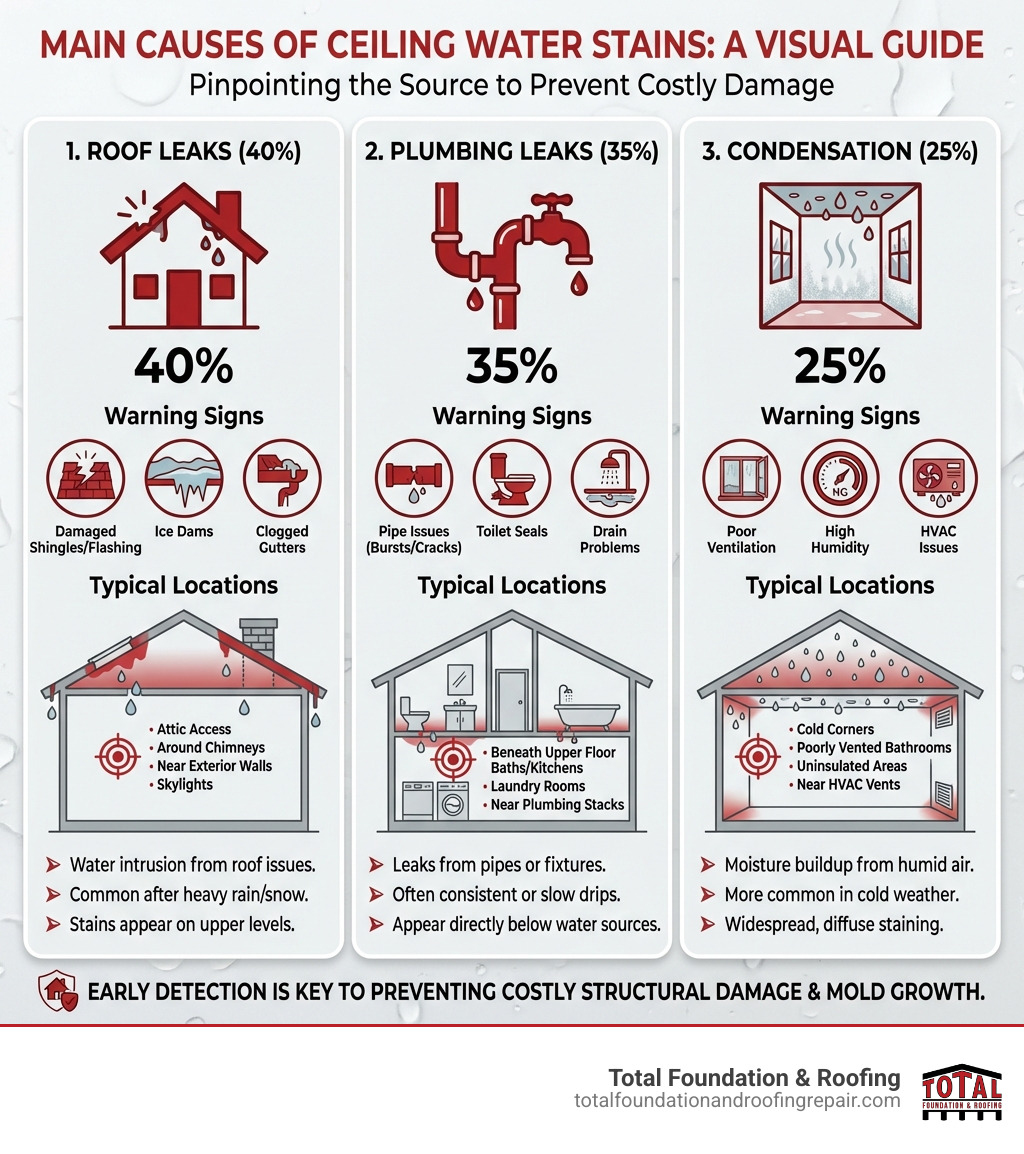
The most frequent culprits behind ceiling water stains are roof leaks, plumbing issues, or condensation. If you discover a damp spot, take these immediate steps to mitigate the damage:
- Contain the Water: Place buckets or waterproof tarps under the leak to catch drips. Move furniture, electronics, and other valuables away from the affected area.
- Relieve Pressure (If Necessary): If the ceiling is visibly sagging or bulging with water, it is at risk of collapsing. Carefully puncture the center of the bulge with a small tool to allow the water to drain into a bucket. This can prevent a larger section of drywall from coming down.
- Address Electrical Risks: If water is near any light fixtures, fans, or outlets, turn off the power to that circuit at the breaker box immediately to prevent short circuits or fire.
- Document Everything: Take clear photos and videos of the stain, any sagging, and the resulting damage. This documentation is crucial for your homeowner’s insurance claim.
- Call for Help: Contact a professional roofing contractor for a thorough inspection to accurately diagnose the source.
In the Texas Hill Country, the combination of intense UV radiation from the sun and sudden, heavy downpours puts unique stress on roofing materials. A small, overlooked stain can hide significant structural decay, and with mold capable of growing in as little as 24 hours, a fast response is crucial to protect your home and family.
What Causes a Damp Spot on a Ceiling and What Are the Risks?
Finding a damp spot on ceiling surfaces is alarming for any homeowner. These spots often appear as unsightly brown, yellow, or gray patches and can be accompanied by other tell-tale signs like sagging drywall, peeling or bubbling paint, or a persistent musty odor.

The dangers of ignoring a ceiling stain are significant and can compound quickly:
- Mold Growth: Moisture creates the perfect breeding ground for mold. According to the U.S. Environmental Protection Agency, mold can begin to grow within 24-48 hours, posing health risks such as respiratory issues, asthma attacks, and allergic reactions.
- Structural Damage: Prolonged water exposure is devastating to building materials. It weakens and rots wooden ceiling joists and roof rafters, compromises the integrity of drywall, and can lead to a potential collapse. This can escalate a small issue into a major roof water damage repair project.
- Electrical Hazards: Water is an excellent conductor of electricity. If it seeps into areas with wiring or light fixtures, it creates a severe risk of short circuits, electrical shock, and fire.
- Increased Costs: The longer you wait, the more expensive the repair becomes. A small stain that could have been fixed with a simple patch might evolve into a problem requiring drywall replacement, extensive mold remediation, and even structural repairs.
How to Identify the Cause of a Damp Spot on Your Ceiling
Pinpointing the source is the most critical step, as water can travel a long distance from its entry point before showing up on your ceiling. A bit of detective work can help you narrow down the possibilities.
| Cause | Visual Signs | Location Clues | Key Indicators |
|---|---|---|---|
| Roof Leaks | Yellow/brown stains with a distinct “ring,” often spreading after rain. | Top floor, near chimneys, vents, skylights, or in the middle of a room. | Wet attic insulation, damaged/missing shingles, cracked flashing, clogged gutters, deteriorated pipe boots. |
| Plumbing Leaks | Round, consistently spreading stains that may grow with water usage. Often darker in the center. | Directly under bathrooms, kitchens, laundry rooms, or near walls containing water lines. | Dripping sounds, a sudden increase in your water bill, stain appears after using a specific fixture (toilet, shower). |
| Condensation | General dampness, fuzzy mold/mildew growth (often black or green), no distinct brown ring. Peeling paint. | High-humidity areas like bathrooms and kitchens, closets, or rooms with poor ventilation. | High indoor humidity, lack of exhaust fans, condensation on windows, clogged HVAC drain line. |
Roof Leaks: If the stain is on the top floor and gets worse after it rains, a roof leak is the most likely culprit. Check your attic for damp insulation, water marks on the wood, or daylight peeking through the roof deck. On the exterior, look for damaged shingles, cracked sealant, or compromised flashing around roof penetrations. An expert in roof leak detection can use tools like thermal imaging to find the exact source without invasive measures. Shingle manufacturers like GAF and Owens Corning provide detailed product specifications that help professionals perform seamless repairs.
Plumbing Leaks: If the stain is located below a bathroom, kitchen, or laundry room, suspect a plumbing issue. Common sources include failing toilet wax seals, leaky pipes under sinks, cracked shower pans, or failing supply hoses for washing machines and dishwashers. To check for a hidden leak, turn off all water-using appliances and check your water meter; if the dial is still moving, you likely have a leak somewhere in your system.
Condensation: This occurs when warm, moist air makes contact with a cold ceiling surface, causing water vapor to condense into liquid. It is common in poorly ventilated bathrooms and kitchens. Another major cause is a clogged condensate drain line from your HVAC system, which can cause the drain pan to overflow into your ceiling. The long-term solution is to improve airflow by consistently using exhaust fans, opening windows, or using a dehumidifier to maintain indoor humidity between 30-50%.
Addressing the Source and Repairing the Damage
Once the source of the water has been found and permanently fixed, you can proceed with repairing the ceiling. It is absolutely essential that the area is completely dry first. Using a moisture meter can confirm this.
1. Addressing the Source:
- Roof Leaks: This may involve replacing damaged shingles from a trusted manufacturer like GAF or Owens Corning, resealing flashing, or repairing cracked pipe boots. Regular gutter cleaning is also a critical preventative measure. For more extensive issues, professional roof repair services ensure that the entire roofing system—including underlayment, decking, and ventilation—is properly evaluated and restored.
- Plumbing Leaks: Fixes can range from tightening a loose connection and replacing a toilet’s wax seal to calling a licensed plumber for more complex pipe replacement.
- Condensation: Improve ventilation with high-quality exhaust fans, use a dehumidifier, and ensure your attic and pipes are properly insulated. Regularly check and clear your HVAC condensate line. In severe cases where moisture has affected the home’s base, it may even require foundation water leak repair.
2. Repairing the Ceiling:
- Prepare: Protect your floors and furniture with drop cloths. Wear safety gear, including goggles, gloves, and a dust mask. For homes built before 1980, consider testing for asbestos or lead paint before scraping.
- Scrape & Clean: Carefully scrape away any loose paint or damaged drywall. Clean the stained area with a solution of one part bleach to three parts water to kill any remaining mildew and let it dry completely.
- Patch: For small holes or cracks, use spackle or joint compound. For larger damaged areas, you may need to cut out the section and patch it with a new piece of drywall, using mesh tape on the seams for reinforcement. Sand the patch smooth once it’s fully cured.
- Prime: This is the most important step for a lasting cosmetic repair. Apply a coat of a high-quality, oil-based or shellac-based, stain-blocking primer. This type of primer creates an impermeable barrier that prevents the water stain from bleeding through the new paint.
- Paint: Once the primer is dry, apply one or two coats of ceiling paint that matches the existing color and finish. Feather the edges of the new paint to help it blend seamlessly with the rest of the ceiling.
For a detailed guide on this process, see the post on how to fix ceiling water stains like a pro. Resources from organizations such as the Roofing Contractors Association of Texas can also help homeowners understand licensing and best practices when hiring a contractor.

When to Call a Professional for Your Ceiling Leak
While some minor fixes and cosmetic repairs are DIY-friendly, many situations involving a damp spot on ceiling surfaces require an expert. Attempting a complex repair without the right skills or tools can lead to further damage, so it’s important to know when to call a professional.
Here are key indicators that it’s time to bring in an expert:
- Large or Sagging Stains: A stain that is large, growing quickly, or causing the ceiling to droop, bulge, or feel soft indicates significant water saturation and an imminent risk of collapse.
- You Can’t Find the Source: If you’ve done some basic investigation and the leak’s origin isn’t obvious, professionals can use specialized tools like thermal imaging to detect roof leaks and moisture meters to find hidden moisture without destructive searching.
- The Stain Returns: If you’ve repaired a stain and it reappears, it means the underlying problem was not fully resolved. A professional can trace the water path to its true source.
- Electrical Hazards: Never attempt to fix a leak near wiring or light fixtures. Turn off the power and call an electrician and a roofing or plumbing professional immediately.
- Complex Roof Issues: Repairs involving flashing, roof valleys, chimney crickets, or structural components require an experienced roofer. In some cases, the damage may be extensive enough to warrant coordinated roof replacement services.
- Widespread Mold: If you see mold covering an area larger than 10 square feet, professional mold remediation is necessary to ensure it is removed safely and completely without spreading spores throughout your home.
What a Professional Inspection Involves
A professional inspection is a systematic process to guarantee an accurate diagnosis. It typically includes:
- Interior Assessment: The expert will examine the stain and surrounding areas, often using a moisture meter to determine the extent of the water saturation in the drywall and framing.
- Attic Inspection: If accessible, the attic is the best place to find evidence. The inspector will look for wet insulation, water stains on the underside of the roof decking, and signs of poor ventilation or condensation.
- Exterior Roof Inspection: The professional will safely walk the roof to check for damaged shingles, cracked sealant around vents and pipes, compromised flashing, and clogged gutters.
- Advanced Diagnostics: For elusive leaks, thermal imaging cameras can be used to detect temperature differences caused by trapped moisture that is invisible to the naked eye.
The Financial Risk of Waiting
Delaying a professional repair is a costly gamble. A minor leak that might have been a $300-$500 fix can quickly escalate. Once water damages structural joists, rots roof decking, and allows mold to proliferate, the cost can skyrocket into thousands of dollars for structural repairs, mold remediation, and extensive interior restoration. Acting fast saves money and protects your property’s value.
For homeowners throughout the Texas Hill Country, from Kerrville, TX to the surrounding communities, a local expert understands how the region’s intense sun and heavy rains affect roofing systems. Total Foundation & Roofing offers certified inspections as part of their full range of roofing services to diagnose the problem accurately and provide a lasting solution. According to home maintenance experts, a professional inspection is recommended every three to five years to catch potential leaks early.
Do not wait for a small stain to become a major disaster. Homeowners can request a free estimate for professional roof leak detection and, when necessary, coordinate related foundation repair services to address any moisture-related movement at the base of the structure.