
Your Driveway’s First Impression: Why Repair and Sealing Matters
Concrete driveway repair and sealing is essential for protecting your investment and maintaining curb appeal. A cracked, stained driveway is more than an eyesore; it’s a warning sign of potential structural problems, especially in the Texas Hill Country where weather and soil movement take their toll. Fortunately, most damage is preventable with proper maintenance. This guide will help you understand your options to save money and protect your property value. Total Foundation & Roofing has helped countless homeowners across the Hill Country restore their driveways, and we’re here to share our expertise.
Quick Overview:
- Repair minor cracks with flexible polyurethane caulk ($50-$200 DIY).
- Resurface surface damage for $3-$20 per square foot.
- Replace severely damaged driveways for $5,000-$10,000+.
- Seal every 3-5 years to extend lifespan to 30+ years.
- Call a pro for cracks wider than 1/2 inch or sinking slabs.
As the owner of Total Foundation & Roofing Repair with 18 years in the industry, I’ve seen every concrete driveway repair and sealing challenge our Texas climate presents. This guide shares the proven methods we use to help homeowners make informed decisions, from simple crack repairs to complete resurfacing.
Helpful Resources:
The Complete Guide to Concrete Driveway Repair and Sealing
Identifying Common Driveway Damage and Its Causes
Understanding common driveway problems is the first step in effective concrete driveway repair and sealing. Here are the typical types of damage you might see and what causes them.
Common Types of Concrete Damage:
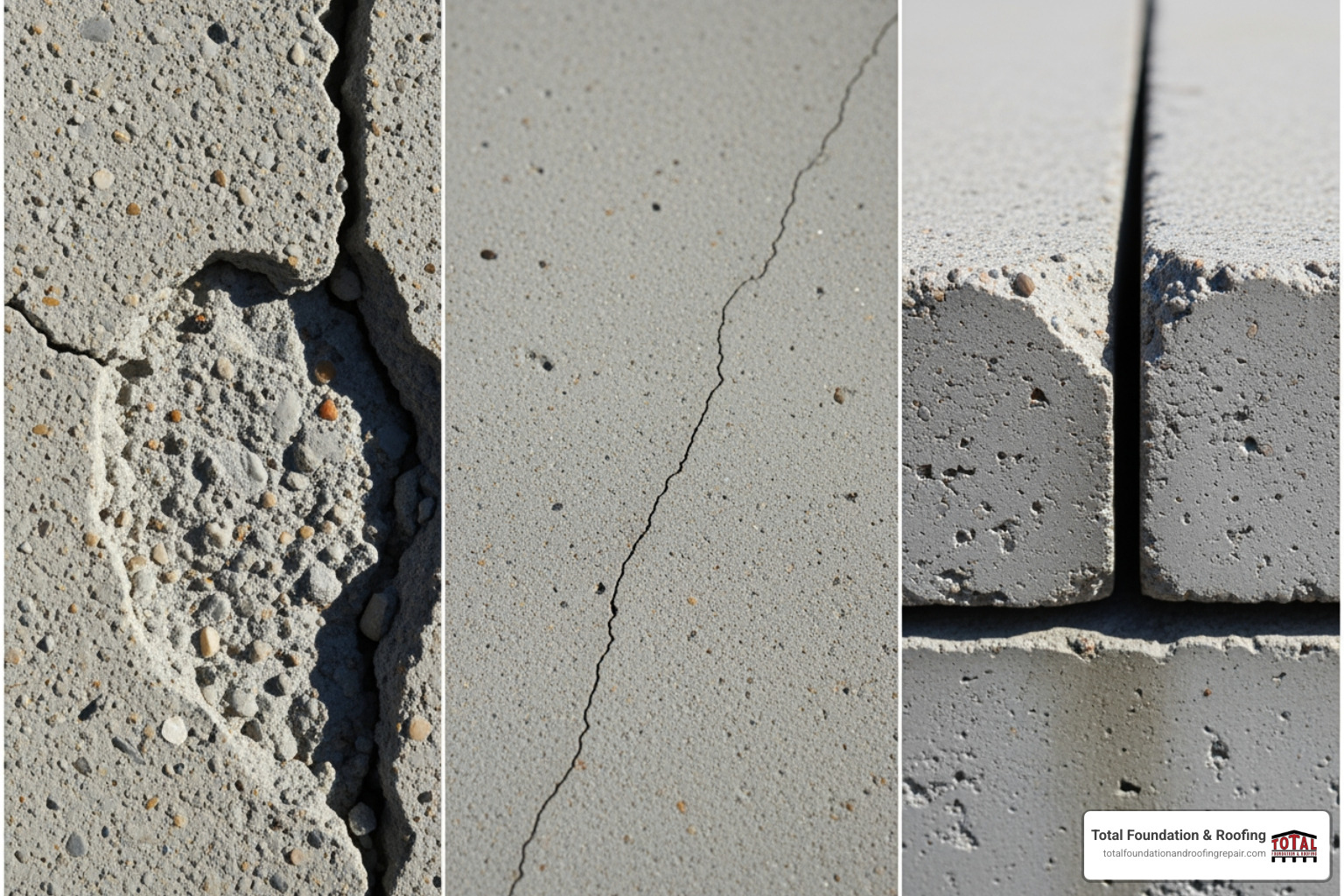
- Hairline Cracks: Thin, superficial cracks that can allow water to seep in.
- Spalling: Flaking or chipping of the concrete surface, revealing a rough texture.
- Pitting: Small, crater-like holes on the surface, often from aggregate deterioration.
- Uneven Slabs: Sections of the driveway that have sunk or heaved, creating a tripping hazard.
- Crumbling Concrete: Advanced deterioration where the material breaks apart, indicating structural weakness.
Primary Causes of Concrete Deterioration:
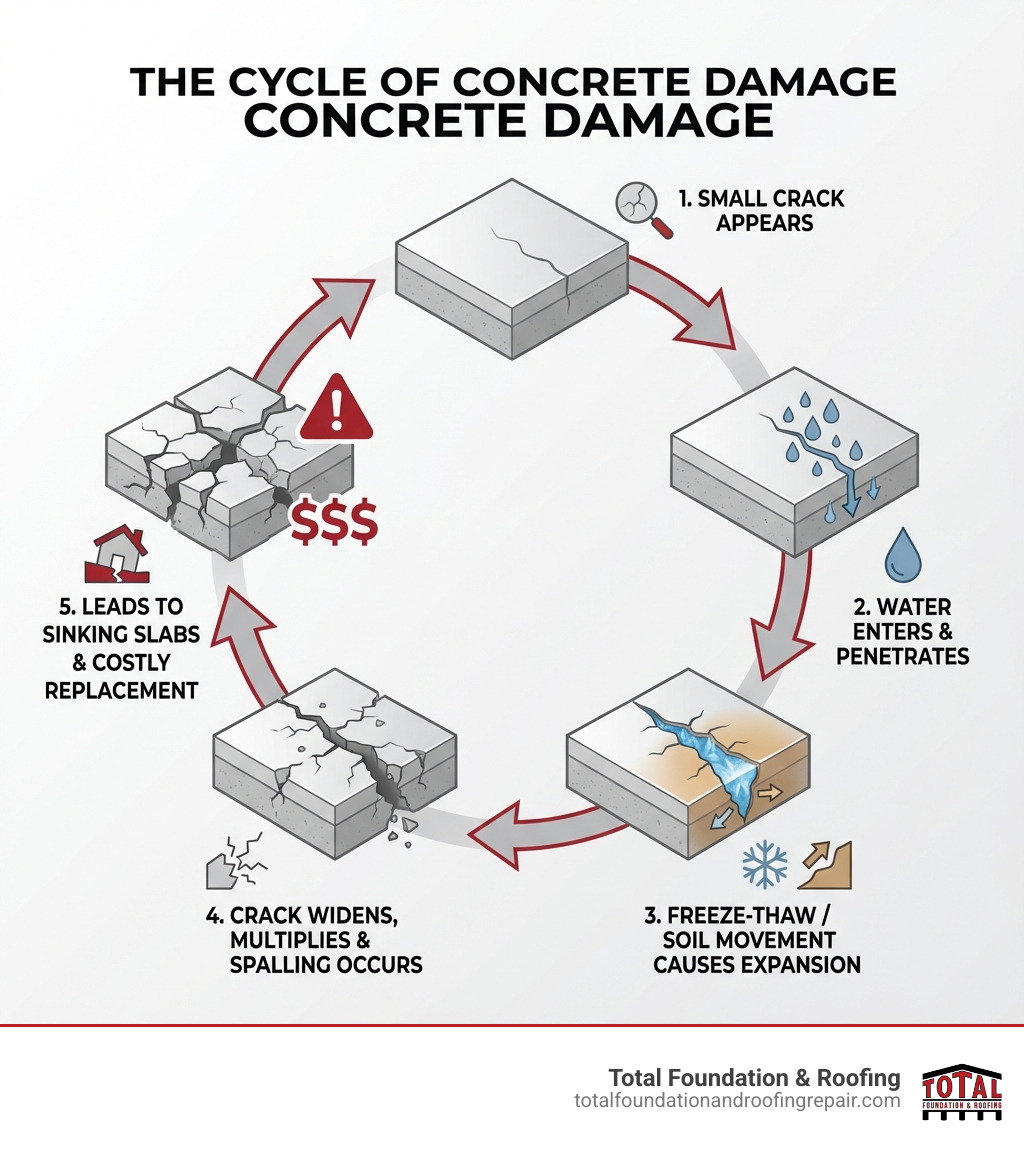
- Freeze-Thaw Cycles: Water enters cracks, freezes, expands, and widens the damage. This cycle is a primary cause of spalling and pitting.
- Soil Movement: Expansive soils, common in Texas, swell and shrink, causing slabs to shift, crack, and settle unevenly.
- Tree Roots: Growing roots can exert immense pressure, lifting and cracking concrete slabs from below.
- Heavy Loads: Parking oversized vehicles like construction equipment or moving vans can stress the concrete beyond its limit.
- Improper Installation: A poor concrete mix, too much water, or an improperly prepared base can lead to premature failure.
- Deicing Chemicals: Certain salts chemically attack concrete. We recommend using sand for traction in Kerrville, Fredericksburg, and Comfort.
Understanding these causes is key to proper repair. For issues related to shifting slabs, our Concrete Heaving Repair Complete Guide offers more insight.
Repair, Resurface, or Replace? Making the Smart Choice
Deciding between repair, resurfacing, or replacement depends on the damage severity, your budget, and long-term goals.
- Repair: Best for minor issues like isolated hairline cracks or small chips. It’s the most cost-effective option, often under $100 for a DIY project, and prevents small problems from worsening.
- Resurface (Overlay): Ideal when the driveway is structurally sound but has widespread surface damage like numerous small cracks, spalling, or discoloration. An overlay applies a new top layer, making the driveway look new for $3 to $20 per square foot. It won’t fix underlying structural problems. Learn more in our guide to the Average Cost of Concrete Driveway Resurfacing and this resource on Concrete Driveway Resurfacing with Coatings & Overlays.
- Replacement: Necessary for deep structural cracks (wider than 1/2 inch), severely uneven slabs, or crumbling concrete. This is the only long-term solution for a failed base. Though it’s the most expensive option at $5,000 to $10,000+, it provides a new driveway that can last 30+ years. See our breakdown of the Average Cost for a New Driveway.
Use this table to compare your options:
| Factor | Repair | Resurfacing (Overlay) | Replacement |
|---|---|---|---|
| Average Cost | Under $100 (DIY) | $3 – $20 per sq. ft. | $5,000 – $10,000+ |
| Project Time | Hours to a day | 2-3 days | 3-7 days |
| Longevity | Several years | 5-15 years | 20-30+ years |
| Best For | Hairline cracks, small chips | Widespread surface damage | Deep cracks, uneven slabs |
For substantial damage, a professional evaluation is always recommended to ensure you choose the right solution.
A DIY Guide to Concrete Driveway Repair
For homeowners in Kerrville, Fredericksburg, and Comfort, tackling minor crack repair is a rewarding DIY project. Using flexible polyurethane caulk is the best method, as it accommodates the concrete’s natural movement. Rigid fillers like mortar will only crack again.
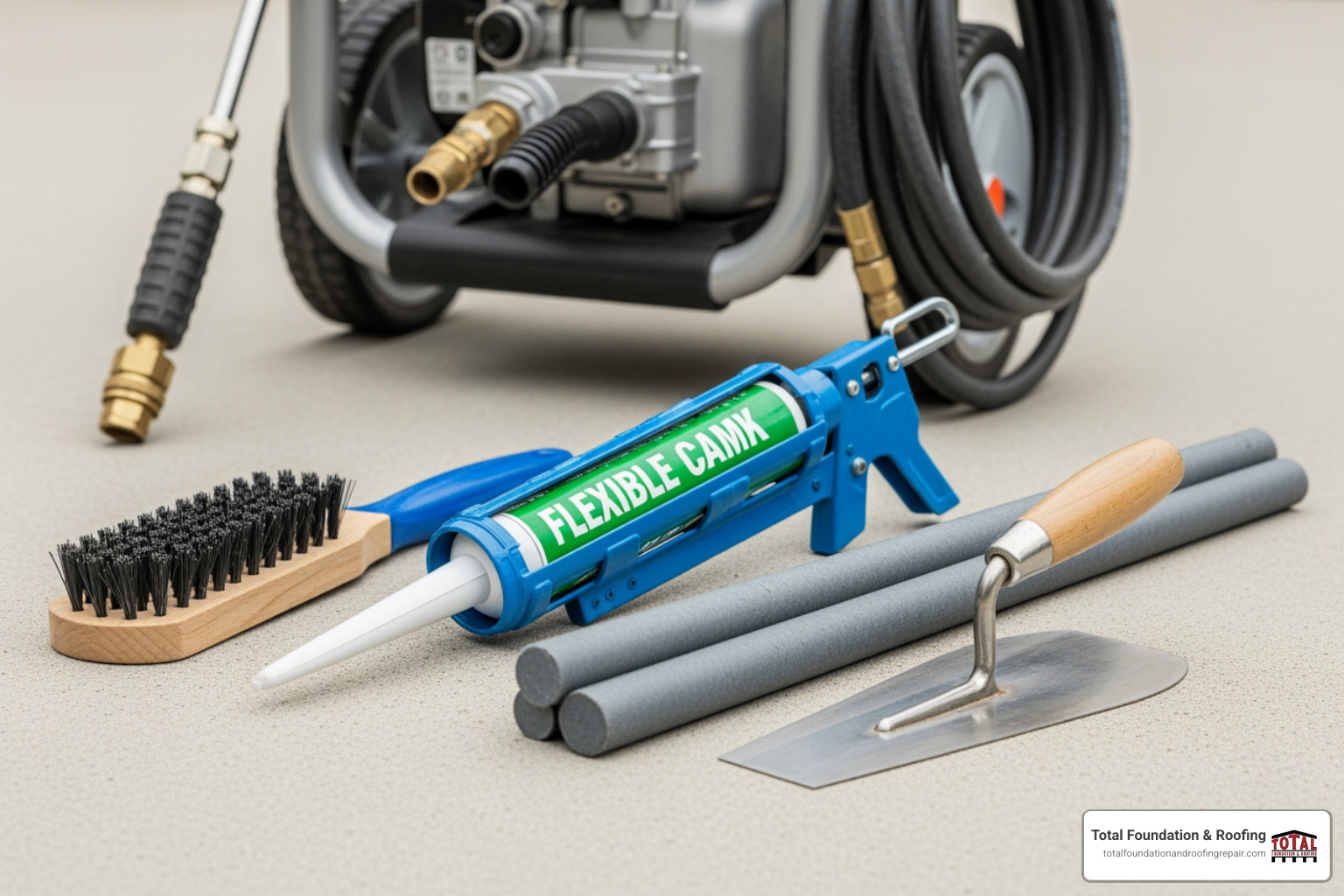
Required Tools & Materials:
- Tools: Pressure washer, wire brush, caulk gun, utility knife, trowel, gloves, and eye protection.
- Materials: Flexible polyurethane concrete caulk, backer rod for deep cracks, masonry degreaser, and optional dry sand for blending.
Step-by-Step Crack Repair Process:
- Prepare the Surface: Clean the entire driveway with a pressure washer and degreaser to remove dirt, grime, and oil.
- Clean the Crack: Use a wire brush to aggressively scrub out all loose debris, dirt, and vegetation from inside the crack. The surface must be completely clean and dry for the caulk to bond.
- Insert Backer Rod: For cracks wider or deeper than 1/2 inch, push a foam backer rod into the crack, leaving it about 1/2 inch below the surface. This saves caulk and creates a better seal.
- Apply Flexible Caulk: Apply a steady bead of polyurethane caulk into the crack. Fill it completely but keep the caulk bead slightly below the driveway surface to protect it from traffic.
- Smooth and Blend: Smooth the caulk with a gloved finger or putty knife. While the caulk is wet, sprinkle dry sand over it and gently tap it in to help the repair blend with the concrete’s texture.
- Cure: Allow the repair to cure for 24-48 hours, or as directed by the manufacturer, before walking or driving on it.
For more tips on repairs, see our guide on patching cracks in concrete. If slabs are uneven, they must be leveled professionally before caulking.
Maximizing Longevity: Sealing and Professional Expertise
The Step-by-Step Process for Sealing a Concrete Driveway
After repairs have cured, sealing your driveway is the crucial final step. A quality sealer acts as a protective shield against moisture, stains, and wear. For Texas driveways, a penetrating sealer offers excellent protection against moisture and UV rays.
Preparation for Sealing:
- Inspect and Repair: Ensure all previous repairs are fully cured.
- Clean Thoroughly: Pressure wash the entire driveway to remove all dirt, oil, and old, flaking sealer. Use a concrete degreaser on stubborn stains.
- Dry Completely: The concrete must be bone-dry. Allow at least 24-48 hours of drying time after washing.
- Check the Weather: Apply sealer on a cool, overcast day with no rain in the forecast for at least 24 hours.
How to Apply Concrete Sealer:
- Apply in Thin Coats: Use a roller or garden sprayer to apply a thin, even coat. Work in manageable sections to maintain a wet edge and avoid streaks. Do not allow the sealer to puddle.
- Add a Second Coat (If Needed): Follow the manufacturer’s instructions. Many products recommend a second thin coat for maximum durability.
- Allow to Cure: Keep foot and vehicle traffic off the driveway for 24-48 hours, or as directed, to allow the sealer to fully harden.
For more details, see our Concrete Driveway Refinishing Complete Guide and this external Guide to Maintaining a Concrete Driveway.
Benefits and Best Practices for Concrete Driveway Sealing
Proactive sealing is the most effective way to maximize your driveway’s lifespan. A properly sealed driveway can last 30 years or more.
Key Benefits of Sealing:
- Prevents Water Damage: Creates a barrier against water and deicing salts, preventing damage from freeze-thaw cycles.
- Resists Stains: Makes the surface less porous, blocking oil, gas, and other fluids from causing stains.
- Extends Lifespan: Protects your investment and delays the need for costly replacement.
- Improves Curb Appeal: A sealed driveway looks clean and new, boosting your home’s appearance.
How Often Should You Seal?
Plan to seal your concrete driveway every 3-5 years. You may need to seal more often (every 2-3 years) if it sees heavy traffic or is exposed to harsh weather. If the finish looks dull or worn, it’s time to reseal.
Consequences of Neglect:
Ignoring concrete driveway repair and sealing leads to expensive problems. Small cracks will expand, repair costs will multiply, and property value will decrease. Worse, an uneven or crumbling driveway is a safety hazard, and poor drainage can even lead to water damage around your home’s foundation, causing serious foundation problems.
When to Call a Professional for Concrete Repair
While DIY is great for small jobs, some issues require an expert. Recognizing these signs will save you time and money by ensuring the job is done right the first time.
Signs You Need Professional Concrete Repair:
- Large Structural Cracks: Cracks wider than 1/2 inch, very deep cracks, or those spanning multiple slabs point to underlying issues.
- Sinking or Heaving Slabs: Uneven sections indicate soil instability that requires professional concrete leveling with specialized equipment.
- Widespread Crumbling: If large areas of your driveway are deteriorating, the concrete’s integrity is likely compromised.
- Drainage Problems: Puddles or water flowing toward your foundation need professional grading correction.
- Recurring Issues: If DIY repairs fail quickly, a deeper problem needs an expert diagnosis.
Why Choose a Professional?
Professionals offer expert diagnosis to find the root cause of the damage. We use advanced concrete repair methods like polyurethane foam injection and have access to industrial-grade materials for a durable, long-lasting solution.
For homeowners in the Fredericksburg, TX area and across the Texas Hill Country, a local expert is key. Total Foundation & Roofing understands our region’s unique soil and weather challenges. For an honest assessment and a durable solution for your driveway, contact our expert concrete contractors today.