
What That Crack in Your Wall is Telling You
Repairing large cracks in concrete walls requires knowing when a crack is a minor issue versus a sign of serious structural damage. In the Texas Hill Country, expansive soils and weather put constant pressure on foundations, turning small cracks into major problems.
Quick Assessment Guide:
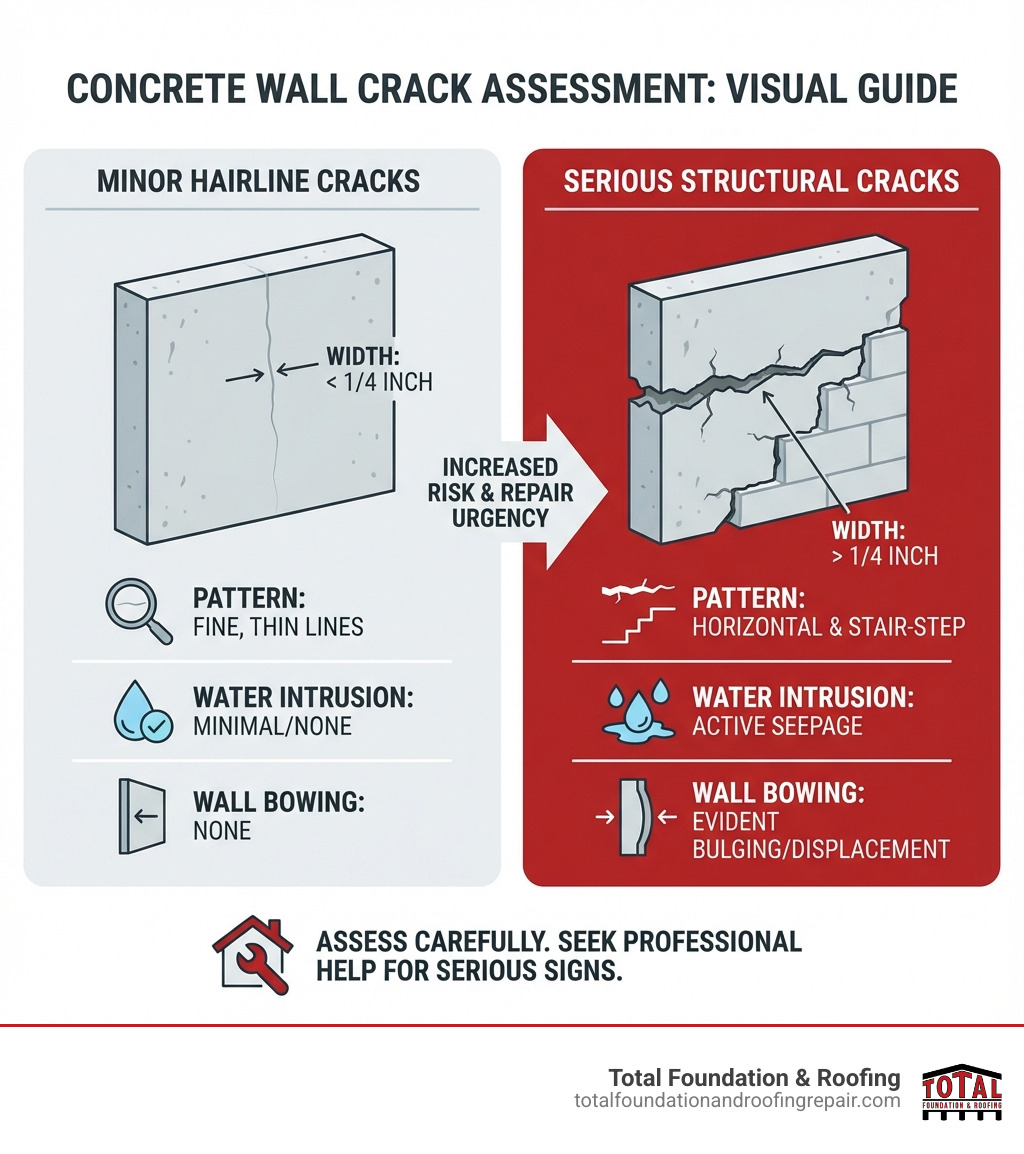
- Cracks wider than 1/4 inch: Require professional inspection.
- Horizontal or stair-step cracks: Often indicate structural issues.
- Cracks visible from both sides: A sign of serious problems.
- Bowing or bulging walls: Call a structural engineer immediately.
- Active water seepage: Address urgently to prevent further damage.
Ignoring foundation cracks can lead to water intrusion, pests, mold, and escalating repair costs. Many DIY fixes fail because they only mask symptoms. Professional solutions like epoxy injection systems can repair cracks from 0.002 inches wide and greater, restoring structural integrity. For expert foundation and roofing solutions in the Texas Hill Country, a proper diagnosis is the critical first step.
With over 18 years of experience, our team at Total Foundation & Roofing Repair has seen how professional assessment saves homeowners from costly failures. This guide will help you understand what you’re dealing with and when to call for help.
Explore more about repairing large cracks in concrete walls:
A Homeowner’s Guide to Assessing and Repairing Large Cracks in Concrete Walls
Structural vs. Non-Structural: How to Read the Cracks
The key to a proper response is differentiating between a minor cosmetic crack and a serious structural issue. This distinction determines whether you can monitor it or need to call professionals.
How can homeowners differentiate between minor cosmetic cracks and serious structural cracks?
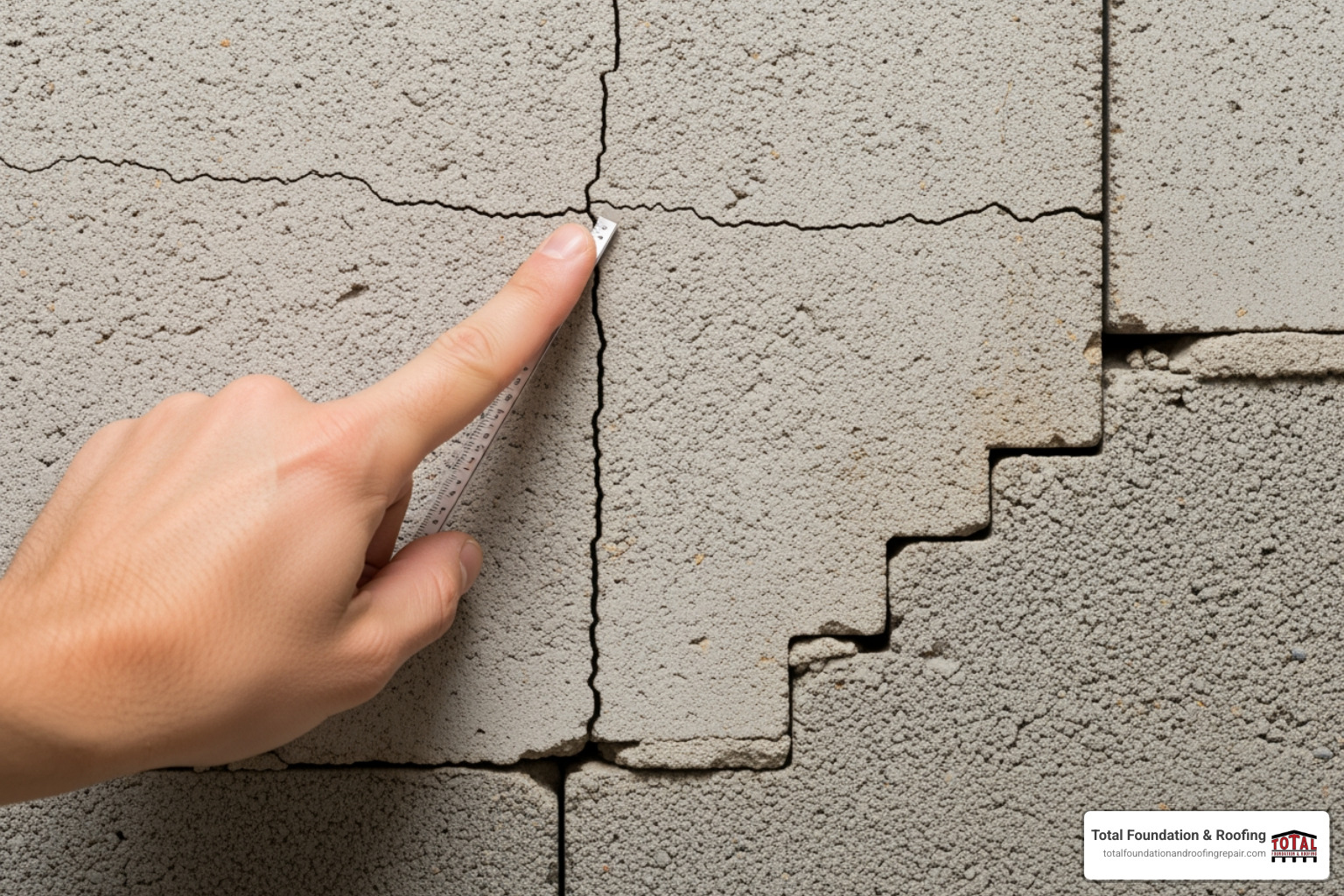
Cosmetic (hairline) cracks are typically thin (less than 1/8 inch) and shallow, resulting from concrete curing. Structural cracks, however, indicate underlying foundation problems. Any crack wider than 1/4 inch, or visible from both inside and outside, warrants a professional inspection.
Here’s a table to help you read the cracks:
| Characteristic | Structural Crack | Non-Structural Crack |
|---|---|---|
| Width | Generally 1/4 inch or wider | Typically 1/8 inch or smaller |
| Direction | Horizontal, diagonal, stair-step | Usually vertical or random |
| Location | Foundation walls, load-bearing walls | Surface-level, non-load-bearing elements |
| Water Intrusion | Common, may cause leaks | Less common, minor seepage |
| Growth | Tends to widen over time | Generally stable |
| Associated Damage | Bowing walls, sticking doors/windows | None, purely cosmetic |
Key warning signs of structural problems include:
- Horizontal cracks: Often caused by exterior soil or water pressure pushing the wall inward.
- Stair-step cracks: A classic sign of differential foundation settlement.
- Bowing or bulging walls: An urgent issue indicating immense pressure and compromised integrity.
- Cracks wider on one end: Suggests ongoing foundation movement.
Any crack that is actively leaking, growing, or accompanied by other issues like sticking doors or uneven floors demands immediate attention. For more information, see our guide on Home Foundation Problems.
The Root Causes: Why Concrete Walls Crack
Understanding why a crack forms is crucial for a permanent fix. Foundation cracks can be caused by soil movement, hydrostatic pressure, foundation settlement, or poor drainage. Without addressing the root cause, any repair is temporary.
What are the common causes of large cracks in concrete walls?
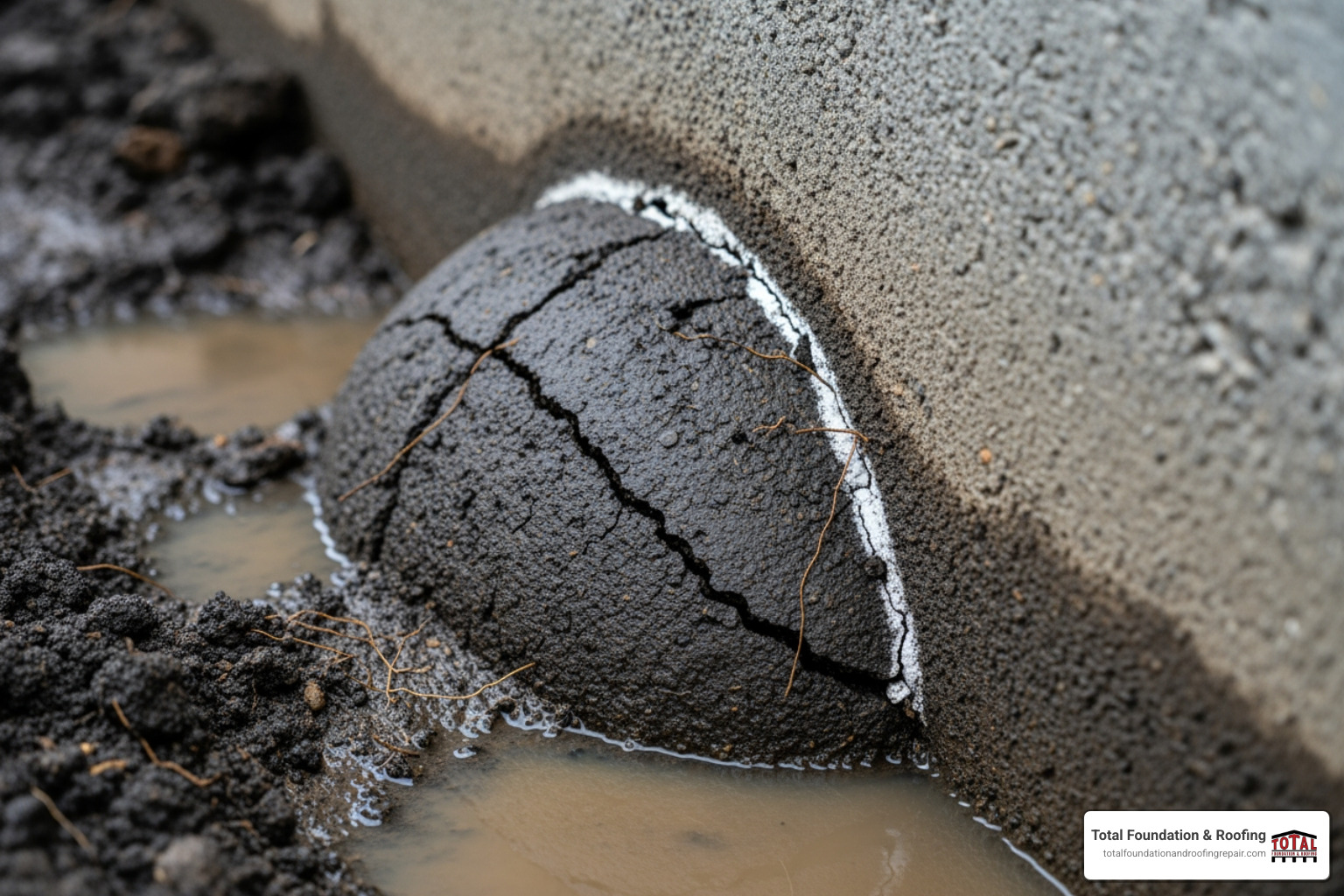
- Hydrostatic Pressure: Water accumulating in the soil exerts immense pressure on foundation walls, causing them to crack or bow inward. This is a major factor in the Texas Hill Country.
- Expansive Clay Soils: Common in Texas, these soils swell when wet and shrink when dry. This constant movement stresses the foundation, leading to cracks.
- Foundation Settlement: Uneven settlement occurs when parts of the foundation sink at different rates due to poor soil compaction or moisture changes, causing diagonal or stair-step cracks.
- Poor Drainage: Clogged gutters, short downspouts, or improper landscape grading cause water to pool around the foundation, leading to hydrostatic pressure. GAF offers a helpful guide on foundation moisture management.
- Soil Erosion: Water runoff can wash away soil that supports the foundation, creating voids and causing it to settle and crack.
- Tree Root Intrusion: Large tree roots can absorb moisture, causing soil to shrink, or physically exert pressure on the foundation walls.
We diagnose the underlying cause to provide a comprehensive solution. Our Foundation Waterproofing Services often accompany crack repair to address these moisture-related issues.
The Dangers of Delay: Risks of Ignoring Large Cracks
Ignoring large concrete wall cracks is a gamble that rarely pays off. Ignoring foundation cracks can lead to bigger problems and more expensive repairs.
What are the risks associated with ignoring or improperly repairing large concrete wall cracks?
- Water Intrusion: Cracks are direct pathways for water, leading to damp basements, musty odors, and potential flooding.
- Mold and Mildew Growth: Persistent moisture creates a breeding ground for mold, which can damage property and pose serious health risks.
- Pest Infestations: Cracks provide easy entry for insects and rodents looking for shelter.
- Compromised Structural Integrity: Unaddressed structural cracks can worsen, leading to wall bowing or even partial collapse. Your home’s stability is at risk.
- Decreased Property Value: Foundation issues are a major red flag for home buyers and can significantly reduce your property’s market value.
- Escalating Repair Costs: A minor crack repair today can prevent a major structural overhaul tomorrow. The longer you wait, the more expensive the fix becomes.
Waiting can turn a manageable repair into a major structural failure. For a comprehensive overview, consult our Foundation Problems Repair Guide. Research from sources like Owens Corning also underscores the importance of prompt action against moisture and structural risks.
The Professional Approach to Repairing Large Cracks in Concrete Walls
When repairing large cracks in concrete walls, a professional approach is essential to restore structural strength, not just seal a gap.
What are the most effective professional methods for repairing large structural cracks in concrete walls?
- Epoxy Injection: High-pressure epoxy injection fills the crack completely, bonding the concrete back together and restoring its original strength. It’s effective for cracks as fine as 0.002 inches.
- Polyurethane Injection: For actively leaking cracks, polyurethane foam is injected. It reacts with water to form a flexible, watertight seal that accommodates minor movement.
- Carbon Fiber Reinforcement: For bowing walls, incredibly strong carbon fiber straps are bonded to the wall’s surface to resist further movement and provide stability.
- Steel Reinforcement: In cases of severe bowing, steel I-beams or wall anchors are installed to brace the wall and prevent further inward movement.
- Foundation Piers: If settlement is the root cause, helical or push piers are installed deep into stable soil to lift and stabilize the foundation.
What is the typical process a professional follows?
- Thorough Inspection: We conduct a detailed assessment to identify the crack type, size, and underlying cause.
- Crack Preparation: The crack is cleaned of all debris. We may V-groove the edges to ensure deeper penetration of repair materials.
- Port Installation: For injection repairs, we place injection ports along the crack and apply a temporary surface seal.
- Resin Injection: We use high-pressure pumps to inject epoxy or polyurethane resin, filling the crack from bottom to top. This process follows industry standards like those from the ACI.
- Curing and Finishing: After the resin cures, we remove the ports and surface seal, leaving a clean, structurally sound repair.
For more details on our comprehensive solutions, please visit our crack repair solutions page.
The Limits of DIY for Repairing Large Cracks in Concrete Walls
We understand the urge to tackle home repairs yourself. However, when it comes to repairing large cracks in concrete walls, DIY methods almost always fall short and can worsen the problem.
What are the limitations and potential drawbacks of DIY repair methods for large concrete cracks?
- Superficial Fixes: Most DIY solutions, like using caulk or store-bought sealant, only address the surface and fail to penetrate the crack’s full depth.
- Failure to Address Root Cause: A DIY patch won’t stop the underlying forces (like soil pressure or settlement) that caused the crack. It will almost certainly reappear.
- Material Limitations: Hydraulic cement is rigid and cracks again with foundation movement. Waterproofing paint is cosmetic and can trap moisture, leading to mold.
- No Structural Restoration: DIY methods cannot re-bond the concrete or restore the wall’s original strength.
- Wasted Time and Money: Failed DIY repairs often result in wasted materials and a more expensive professional repair down the line.
DIY repairs often fail within a few years. For a deeper dive into why surface fixes aren’t enough, read our article on how to Fix Foundation Crack professionally. Adhering to professional standards, like those promoted by organizations such as the Roofing Contractors Association of Texas, is key to quality workmanship.
Securing Your Foundation’s Future
Addressing large concrete cracks promptly and professionally is an investment in your home’s long-term health and value.
When to Call a Structural Engineer vs. a Repair Specialist
While our team is skilled in repairing large cracks in concrete walls, some situations require a structural engineer.
When should a homeowner consult a structural engineer?
- Large, recurring, or rapidly growing cracks.
- Significant wall bowing, leaning, or bulging.
- Uneven floors, indicating major settlement.
- Multiple signs of structural distress (e.g., sticking doors, sagging roofs).
An engineer provides an unbiased assessment and a detailed repair plan for complex issues. In most cases, a Foundation Specialist like us can diagnose the cause and perform the repair. If our assessment reveals severe distress, we will recommend an engineer and can execute their prescribed plan with precision.
What are the long-term benefits of professional crack repair?
Prompt, professional action delivers significant benefits:
- Protects Your Investment: Preserves your home’s structural integrity and market value.
- Ensures Family Safety: Eliminates the hazard of a compromised foundation.
- Prevents Cost Escalation: Stops minor issues from becoming catastrophic and expensive repairs.
- Provides Peace of Mind: A sound foundation removes worry about structural failure or water damage.
- Improves Indoor Air Quality: Sealing cracks prevents moisture intrusion that leads to mold.
For a comprehensive assessment and reliable foundation repair services in Kerrville, TX, trust the certified experts at Total Foundation & Roofing. We are dedicated to providing lasting solutions custom to the Texas Hill Country. Contact us today for a free inspection or to learn more about our crack repair solutions. We also proudly serve Fredericksburg, TX, and Comfort, TX.