
Understanding Pier and Beam Foundations: What Texas Homeowners Need to Know
Pier and beam foundations lift a home above the ground with vertical piers and horizontal beams, creating a crawl space. This method, common in pre-1960s Texas homes, is well-suited for the region’s expansive clay soils and offers unique benefits and challenges. As the owner of Total Foundation & Roofing Repair, I’ve spent over 18 years specializing in these systems in the Texas Hill Country, and this guide shares our team’s expertise. Homeowners who want a long-term, stable structure in shifting soils consistently choose professional foundation repair services that are custom to local conditions.
Quick Answer: Pier and Beam Foundation Basics
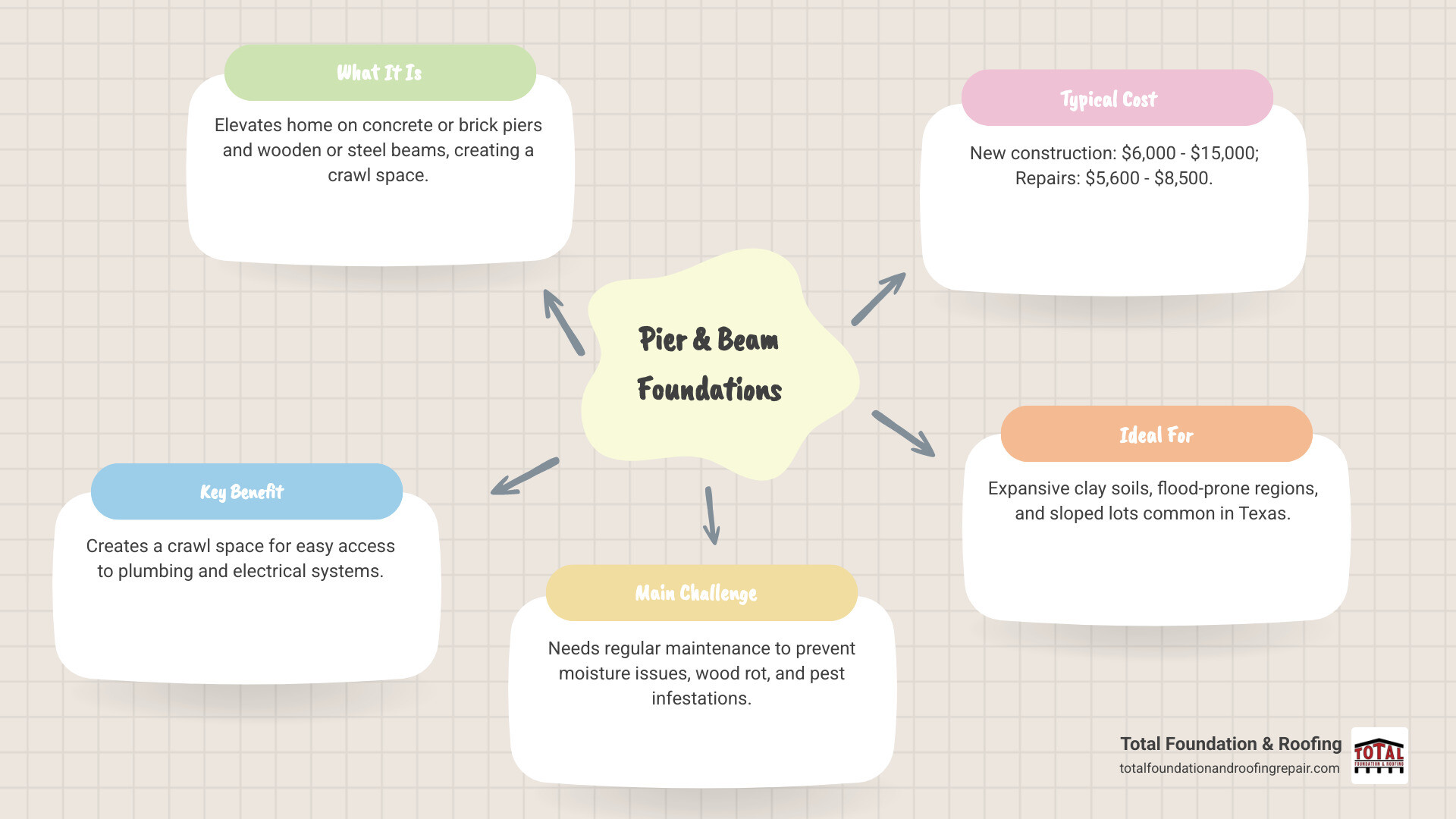
- What it is: A foundation using piers to support beams and the home’s floor structure.
- Key benefit: A crawl space allows easy access to plumbing and electrical systems.
- Main challenge: Prone to moisture, wood rot, and pests without regular maintenance.
- Typical cost: $6,000-$15,000 for new construction; $5,600-$8,500 for repairs.
- Lifespan: 50-100 years with proper care (average 75 years).
- Best for: Expansive clay soils, flood-prone areas, and sloped lots.
The lifted design of a pier and beam foundation protects against flooding and allows the structure to flex with soil movement, a vital feature in Texas. This flexibility is especially important for homes that also rely on long-lasting concrete flatwork and foundation support to manage movement over time.
Relevant articles related to pier and beam:
For homeowners in our service area, understanding these basics makes it easier to spot early issues and schedule timely inspections before small problems turn into major repairs.
The Anatomy of a Pier and Beam Foundation: Pros, Cons, and Costs
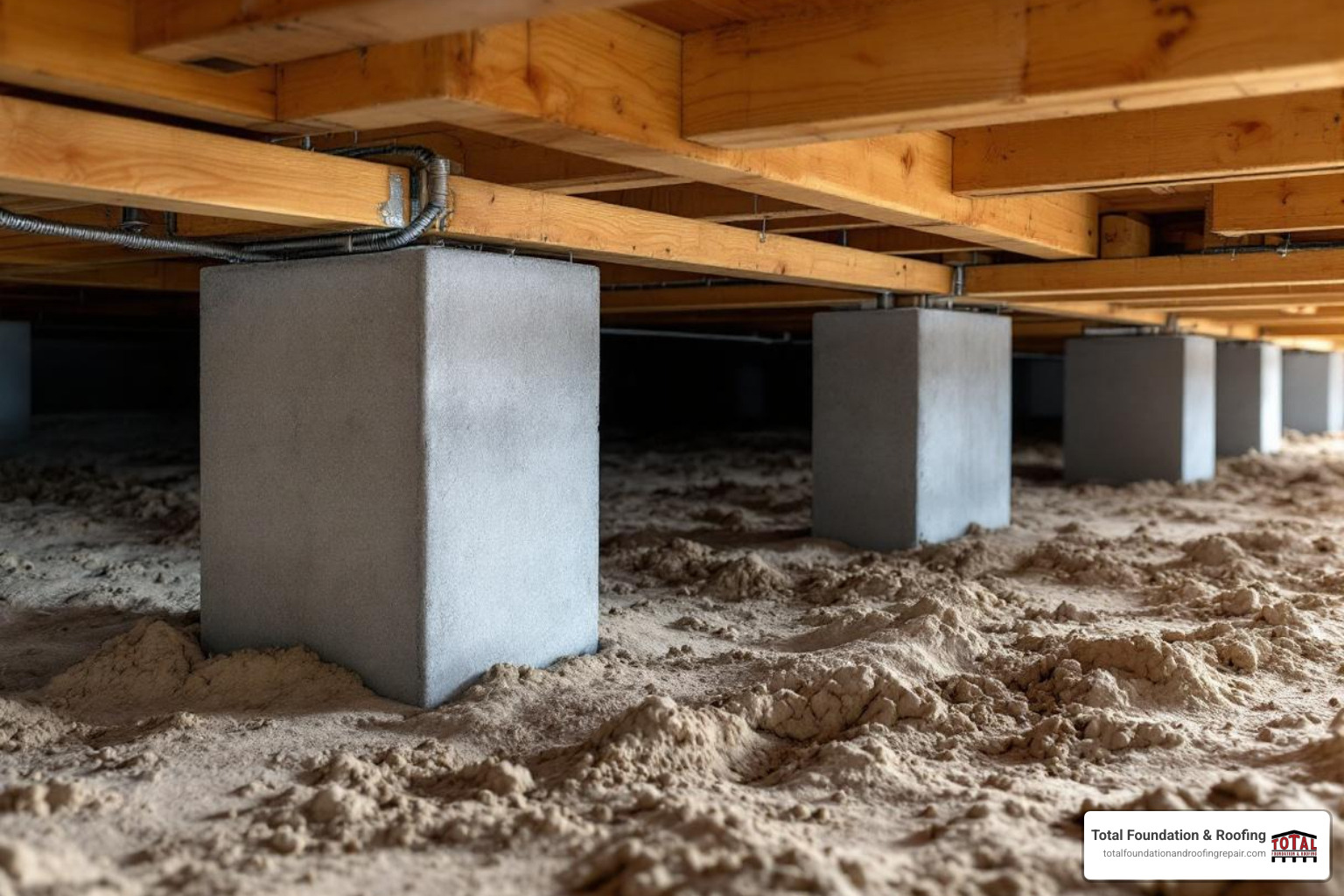
A pier and beam foundation is a complex system that lifts a home, offering more flexibility than a slab foundation but also presenting unique maintenance needs. While initial construction costs of $6,000 to $15,000 are comparable to a slab, long-term costs and repair methods differ. When movement or settlement does occur, access from the crawl space allows targeted pier and beam foundation repair services that are less invasive than many slab-on-grade fixes.
Key Components and How It Differs from a Slab
This system, a type of crawl space foundation, consists of several parts:
- Piers: Vertical supports made of concrete, masonry, or steel that anchor the house to the ground.
- Beams: Horizontal supports, typically treated lumber or steel, that rest on the piers and form a grid.
- Joists: Horizontal members running perpendicular to the beams that support the subfloor.
- Sill Plate: A wooden board anchored to the foundation that serves as the base for wall framing.
- Crawl Space: The accessible area between the ground and the floor, usually 18 inches to 4 feet high.
These components form a structural system that can be inspected, adjusted, and repaired from below, which is one reason many Texas homeowners pair pier and beam foundations with periodic structural crack monitoring and repair.
Pier and Beam vs. Slab Foundation: A Quick Comparison
The main difference is that a slab is a single concrete pad on the ground, while a pier and beam system lifts the home.
| Feature | Pier and Beam Foundation | Slab Foundation |
|---|---|---|
| Structure | Lifted with crawl space; vertical piers, horizontal beams | Concrete pad directly on ground; no crawl space |
| Materials | Concrete/masonry/steel piers; wood/steel beams; wood joists | Concrete, often with rebar reinforcement |
| Elevation | 18 inches to 4 feet off ground | Directly on ground level |
| Utility Access | Easy (in crawl space) | Difficult (embedded in concrete) |
| Soil Suitability | Excellent for expansive/shifting soils, sloped lots | Good for stable soils; can be problematic with expansive soils |
| Flood Resistance | High (lifted home) | Low (direct contact with ground) |
| Repair Cost | $5,600 – $8,500 (easier access) | Can be higher due to access issues |
| Installation Cost | $6 – $15 per sq ft ($6,000 – $15,000 total) | $6 – $15 per sq ft ($6,000 – $15,000 total) |
| Longevity | 50-100 years (avg. 75 with maintenance) | 50-100 years (avg. 75 with maintenance) |
| Energy Efficiency | Can be lower (airflow); improved with insulation | Generally better (less airflow underneath) |
| Pest Vulnerability | Higher (crawl space access) | Lower (direct concrete contact) |
In the Texas Hill Country, expansive clay soil swells when wet and shrinks when dry, stressing rigid slab foundations. The flexibility of a pier and beam foundation allows it to adjust to this soil movement, making it a superior choice for the region. Before building, test the load-bearing soil value to ensure proper design and pair the results with a custom foundation design and repair strategy.
The Upside: Key Advantages for Texas Homeowners
- Flood Protection: By elevating the home, a pier and beam foundation provides a crucial buffer against rising water, protecting the structure from water damage.
- Easy Utility Access: The crawl space allows technicians easy access to plumbing, electrical, and HVAC systems, often resulting in faster and less expensive repairs compared to slab foundations.
- Ideal for Expansive Soils: The segmented design allows the foundation to flex with the shifting clay soils common in the Texas Hill Country, reducing the risk of severe structural damage. Our foundation repair services are custom to address issues in this unique environment.
- Adaptable to Sloped Lots: Piers can be built at different heights to create a level base on uneven terrain, avoiding the need for extensive and costly site grading.
- Relocation Potential: The lifted structure makes it feasible to lift and move the entire house, a unique advantage not possible with slab-on-grade homes.
These advantages are particularly important for homes that also depend on durable roof replacement and repair services to manage storm exposure from top to bottom.
The Downside: Potential Disadvantages to Consider
- Moisture Issues: An unmanaged crawl space can trap moisture, leading to wood rot, mold, and mildew. Musty odors are a common warning sign.
- Pest Infestations: The crawl space can attract rodents, insects, and other pests that may damage wood, insulation, and wiring. A pest or rodent infestation requires professional attention.
- Creaking Floors: The hollow space and wooden structure can lead to more floor creaks. While often harmless, new or excessive noise could signal a structural problem.
- Energy Inefficiency: Cold air circulating in an uninsulated crawl space can lead to cold floors and higher heating bills. The “stack effect” can pull damp air into living spaces, affecting comfort and energy use. According to the Department of Energy, an aging HVAC system can be inefficient, which can worsen energy issues if the crawl space isn’t sealed.
- Limited Load-Bearing Capacity: Compared to a solid concrete slab, these systems may have a lower load-bearing capacity, which could be a limitation for very large or heavy homes.
Homeowners who address these disadvantages early with proper drainage, encapsulation, and scheduled foundation inspections and repairs typically see lower lifetime ownership costs for pier and beam foundations.
A Homeowner’s Guide to Pier and Beam Upkeep and Repair
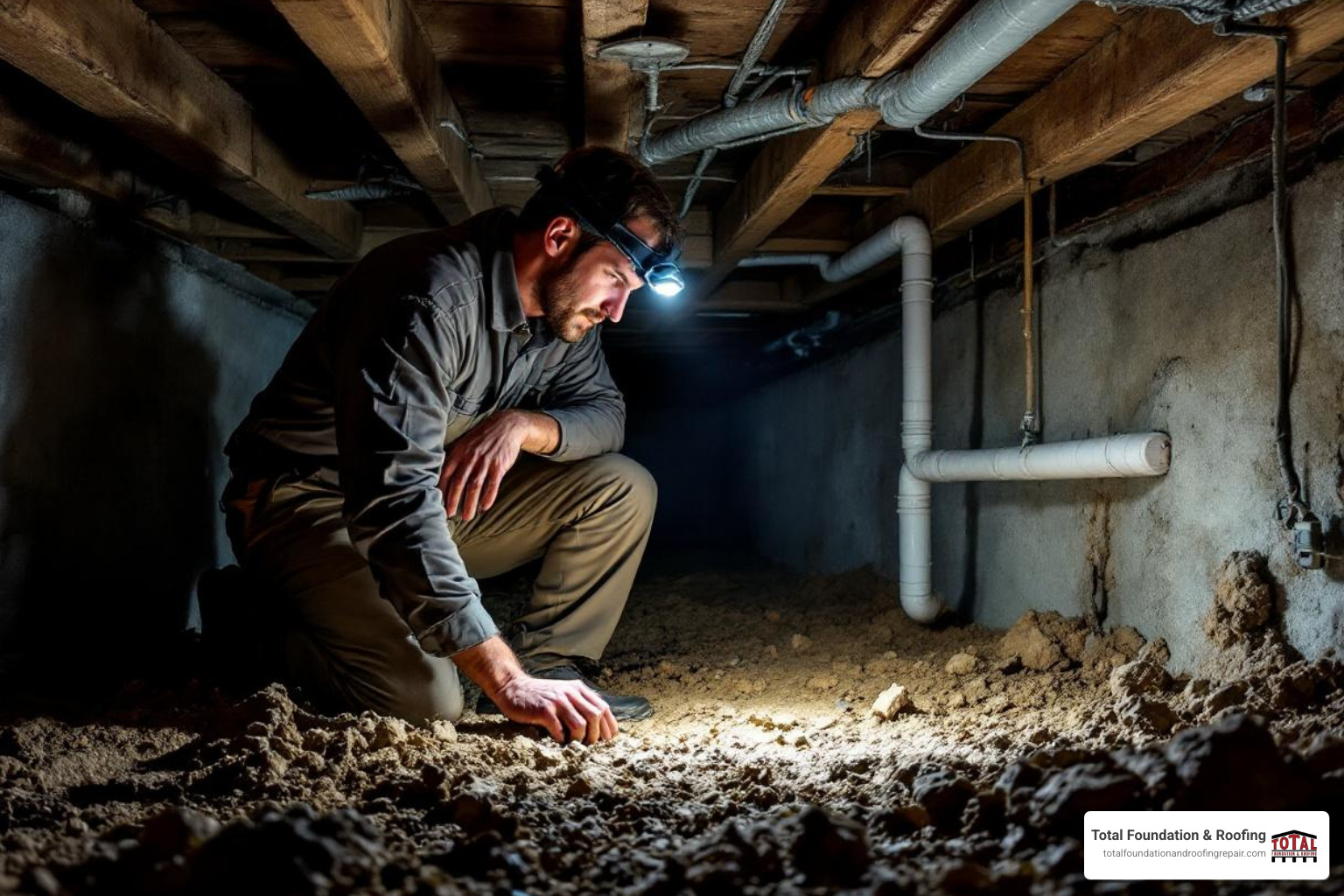
Proactive maintenance is the best way to ensure your pier and beam foundation’s longevity and avoid expensive repairs. Knowing the early warning signs of distress helps you determine when to handle minor upkeep yourself and when to call a professional for structural issues. While minor upkeep can be a DIY task, significant structural issues demand expert attention to prevent compromising your home’s integrity. Many Kerr County homeowners schedule routine foundation inspection and crack repair services on the same cycle as their roof inspections to keep the entire structure performing as a system.
Identifying Common Signs of Foundation Distress
Be alert for these clues that your foundation may need attention:
Interior Signs
- Cracks in Walls and Ceilings: Diagonal cracks extending from door or window frames.
- Sticking Doors and Windows: Doors and windows that jam or no longer latch properly.
- Uneven or Bouncy Floors: Floors that sag, slope, or feel springy underfoot.
- Gaps Between Walls and Floors: Gaps appearing where walls meet the floor or between floorboards.
Exterior Signs
- Brick Cracks: Stair-step or vertical cracks in mortar joints on brick exteriors.
- Leaning or Separated Chimney: A chimney pulling away from the house is a clear sign of settlement.
- Gaps in Roof Fascia: Unevenness in the fascia board where the roofline meets the walls.
- Visible Foundation Damage: Cracks in concrete piers, wood rot, or sagging beams.
If you notice a combination of these signs, it’s time for a professional inspection. Our crack repair services can address many of these tell-tale symptoms, and pairing them with periodic roof leak inspections helps prevent water from entering the structure from above.
Essential Maintenance Practices for Longevity
- Drainage Management: Keep gutters clean and ensure downspouts direct water at least 5 feet away from the foundation to prevent water from pooling. Many long-term issues in the Texas Hill Country start with poor surface drainage.
- Strategic Landscaping: Grade flower beds to slope away from the house. Avoid planting large trees too close to the foundation, as their roots can affect soil moisture. Proper landscaping to keep water away from the house is critical. When choosing what type of plants to put around the foundation of a house, select options that don’t retain excess moisture.
- Crawl Space Moisture Control: Ensure crawl space vents are clear to promote airflow. For persistent dampness, consider installing a vapor barrier or a full encapsulation system with a dehumidifier, a solution recommended by building science experts to control moisture. Pairing moisture control with periodic concrete and flatwork maintenance can further stabilize soils near the home.
- Pest Control: Seal any gaps or holes in the foundation perimeter to block entry points for pests.
- Regular Inspections: Visually inspect your foundation and crawl space annually, especially after extreme weather, to catch problems early. Many building scientists and organizations such as the International Code Council recommend regular visual checks as part of a whole-house maintenance plan.
When to Call a Professional for Your Pier and Beam Foundation
Some issues require an expert to prevent significant structural instability and costly damage. Call a professional if you see:
- Significant Settling or Shifting: Pronounced sagging floors or major wall cracks indicate serious movement.
- Visible Wood Rot or Damage: Rotting beams, joists, or crumbling concrete piers compromise structural integrity.
- Persistent Moisture or Mold: If you can’t resolve standing water or mold growth, an expert can find the source and implement a lasting solution.
- Pest Infestation Damage: A professional can assess and recommend repairs for damage caused by termites or other wood-destroying pests.
What to Expect for Repair Costs
The cost to repair a pier and beam foundation typically ranges from $5,600 to $8,500. This can vary based on the extent of damage, number of piers or beams needing replacement, and crawl space accessibility. Acting quickly is key to controlling costs, and combining foundation work with needed roof repair or replacement can reduce overall disruption to your home.
Choosing a Licensed Contractor: The Total Foundation & Roofing Difference
Foundation repair is not a DIY project. You need a licensed contractor with specific experience in pier and beam systems, especially one who understands the Texas Hill Country’s unique soil and climate. Look for a professional who offers thorough inspections, provides clear written estimates, has local experience, is licensed and insured, and offers warranties.
For homeowners in the Texas Hill Country, our team at Total Foundation & Roofing provides certified, high-quality workmanship for both foundation repair and roofing services. Call us at tel:8305222409 or schedule your free inspection to keep your foundation solid for decades to come.