
Understanding the Flat Roof Challenge in Texas Hill Country
For Texas property owners, changing a flat roof to a pitched roof is a major home improvement decision, often prompted by recurring leaks, standing water, and constant maintenance. If you’re facing these issues, here’s what you need to know.
Quick Answer: Key Facts About Flat to Pitched Roof Conversion
- Average Cost: $15,000 to $50,000+ depending on size and materials
- Typical Timeline: 4-6 weeks for standard projects
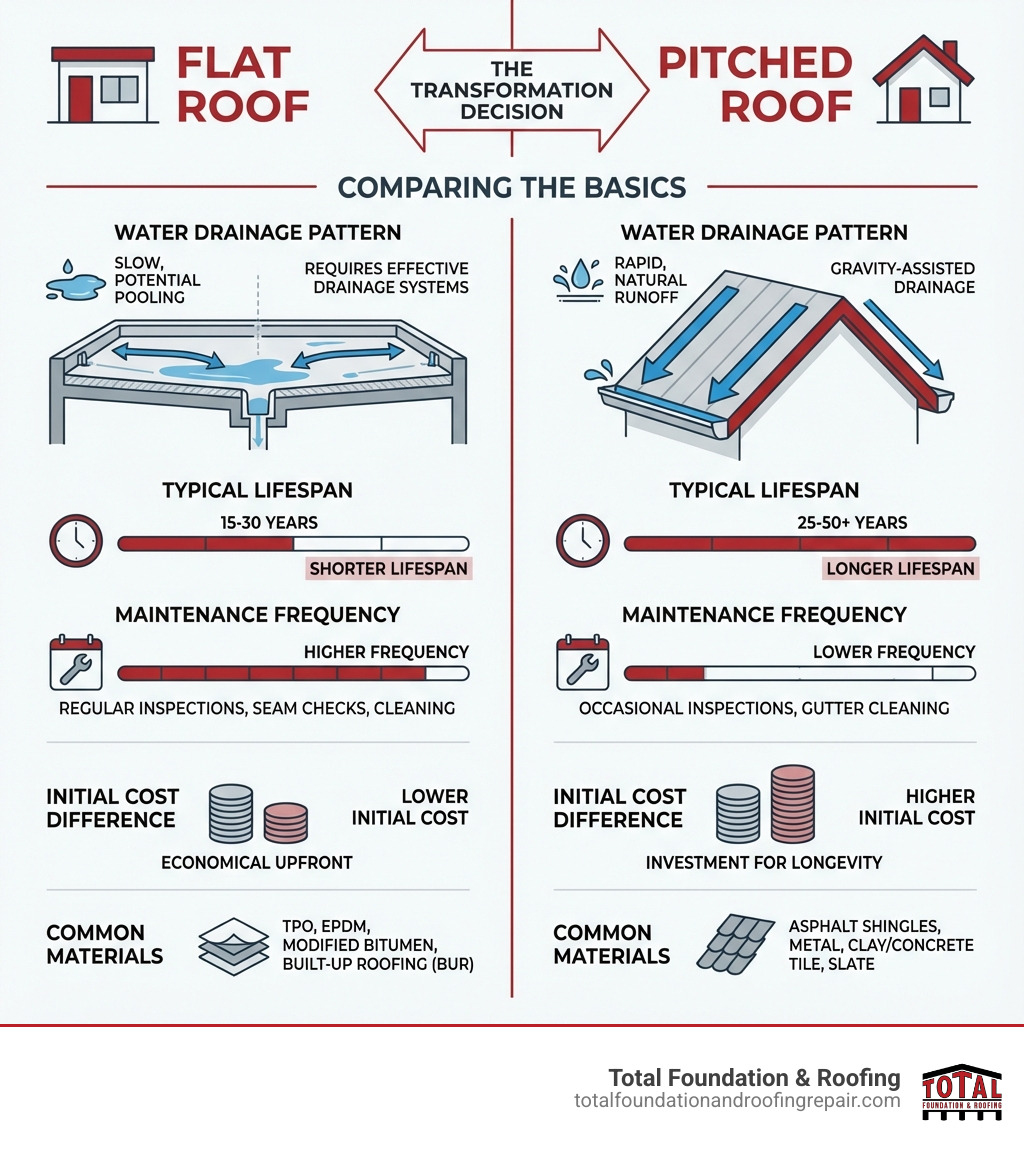
- Lifespan Improvement: Pitched roofs last 25-50+ years vs. 15-30 years for flat roofs
- ROI Factors: Better drainage, reduced maintenance, increased property value, potential attic space
- Requirements: Structural assessment, building permits, professional installation
Flat roofs struggle in the Texas Hill Country climate, leading to ponding water and frequent repairs. While initially cheaper, they require more maintenance than pitched roofs, which naturally shed water, resist storm damage better, and have a longer lifespan with less upkeep.
A pitched roof conversion is a significant investment that solves persistent drainage problems and adds curb appeal. However, it’s crucial to understand the costs, structural needs, and benefits before committing. For homeowners seeking expert roofing solutions, this guide provides the necessary information to steer the conversion process, whether you’re aiming to stop emergency repairs or boost your property’s value.
I’m Daniel Sowell, owner of Total Foundation & Roofing Repair. With over 18 years of experience in the Texas Hill Country, I’ll share insights from hundreds of projects to help you decide if changing a flat roof to a pitched roof is right for you.
The Ultimate Guide to Changing a Flat Roof to a Pitched Roof
Tired of your flat roof acting like a swimming pool after every Texas downpour? You’re not alone. Converting a flat roof to a pitched one is a significant undertaking, but it can transform your home’s functionality, aesthetics, and long-term value.
This section answers the key questions homeowners have about converting their roof.
The Pros and Cons: Is a Pitched Roof Right for You?
The decision to start changing a flat roof to a pitched roof involves weighing numerous factors. Let’s break down the advantages and disadvantages to help you decide if this change is the right move for your Texas home.
| Feature | Flat Roof | Pitched Roof |
|---|---|---|
| Lifespan | 15-30 years (with aggressive maintenance) | 25-50+ years (often 40% longer than flat roofs) |
| Maintenance | Frequent (ponding water, debris, repairs) | Less frequent (annual checks, gutter cleaning) |
| Initial Cost | Generally lower | Higher, due to structural complexity |
| Aesthetics | Modern, minimalist, functional for rooftop use | Traditional, classic, adds curb appeal |
| Energy Eff. | Can be challenging to insulate/ventilate | Excellent ventilation/insulation capacity |
| Drainage | Requires slight pitch, prone to ponding | Natural water shedding, prevents leaks |
| Space | Can be used for decks/gardens | Potential for attic storage or living space |
| Resale Value | Can be polarizing, may deter some buyers | Generally increases property value and appeal |
Advantages of a Pitched Roof Conversion:
- Superior Water Drainage: Pitched roofs use gravity to shed water, preventing the ponding that causes leaks and structural damage on flat roofs.
- Longer Lifespan: A pitched roof can last 25-50+ years, often 40% longer than a flat roof’s 15-30 year lifespan, meaning fewer replacements.
- Increased Property Value: The classic aesthetic of a pitched roof boosts curb appeal and can significantly increase your home’s market value.
- Improved Energy Efficiency: The attic space created allows for superior insulation and ventilation, lowering heating and cooling costs in the Texas climate.
- Potential for Attic Storage or Living Space: The new attic can be used for valuable storage or converted into additional living space like an office or bedroom.
- Improved Aesthetics: A pitched roof adds traditional character and architectural depth, changing your home’s appearance.
Disadvantages or Drawbacks of This Conversion:
- High Initial Investment: This is a major renovation with costs ranging from $15,000 to over $50,000.
- Complex Construction: The project requires professional expertise for structural modifications and to ensure safety and code compliance.
- Potential Structural Modifications Needed: An engineer must verify that your home’s foundation and walls can support the added weight; reinforcement may be required.
- Longer Project Timeline: A full conversion can take several weeks, causing potential disruption to your daily life.
- Permit and Regulation Problems: The project requires building permits and adherence to local codes, a process best handled by an experienced contractor.
The Financial Breakdown: What Does a Roof Conversion Cost?
Understanding the cost of changing a flat roof to a pitched roof is key. While the average cost is around $35,835, prices can range from $15,000 to over $50,000 depending on several factors:
- Roof Size and Pitch: Larger roofs and steeper pitches require more materials and labor, increasing costs.
- Material Choice: Your choice of roofing material, from affordable asphalt shingles to premium metal or slate, is a major cost driver.
- Structural Reinforcement Needs: If your home’s walls or foundation need reinforcement to support the new roof, project costs will increase significantly.
- Labor Rates: Costs vary by location and contractor expertise. Skilled professionals in areas like Kerrville, TX offer competitive rates.
- Permit Fees: Budget for fees required by local building authorities for structural changes.
- Finishing Touches: Costs for new gutters, fascia, soffits, and potential siding extensions contribute to the final price.
It’s crucial to get a detailed Roof Estimate Cost from a reputable contractor. For more industry data, GAF’s Residential Roofing Cost Guide is a valuable resource.
Structural and Legal Problems: Permits and Engineering
Before any work begins, understanding the structural and legal side of changing a flat roof to a pitched roof is paramount for safety.
1. Structural Assessment is Non-Negotiable:
A structural engineer must perform a comprehensive assessment before conversion. They will evaluate if your home’s load-bearing walls, foundation, and existing framework can support the new, heavier pitched roof and withstand wind forces. This expert assessment is the bedrock of a safe and successful conversion.
2. Navigating Building Permits and Regulations:
A flat-to-pitched roof conversion is a major structural alteration requiring building permits. You must adhere to local building codes in Kerrville, Fredericksburg, or Comfort, TX, which dictate everything from pitch minimums to material ratings. A reputable contractor will handle the permit process. This is a major Roof Replacement project, and skipping permits can lead to fines and costly rework. Adherence to standards like Building Regulations is mandatory when structural changes increase roof weight.
The Conversion Process: From Flat to Pitched, Step-by-Step
Changing a flat roof to a pitched roof is a complex project that follows these key steps:
- Initial Consultation & Design: We discuss your goals and budget, then create plans that integrate the new roof with your home’s architecture.
- Structural Engineering & Permitting: A structural engineer assesses your home’s capacity to support the new roof, after which we secure all necessary building permits.
- Site Preparation: We protect your property, set up scaffolding, and, if necessary, remove the existing flat roof structure.
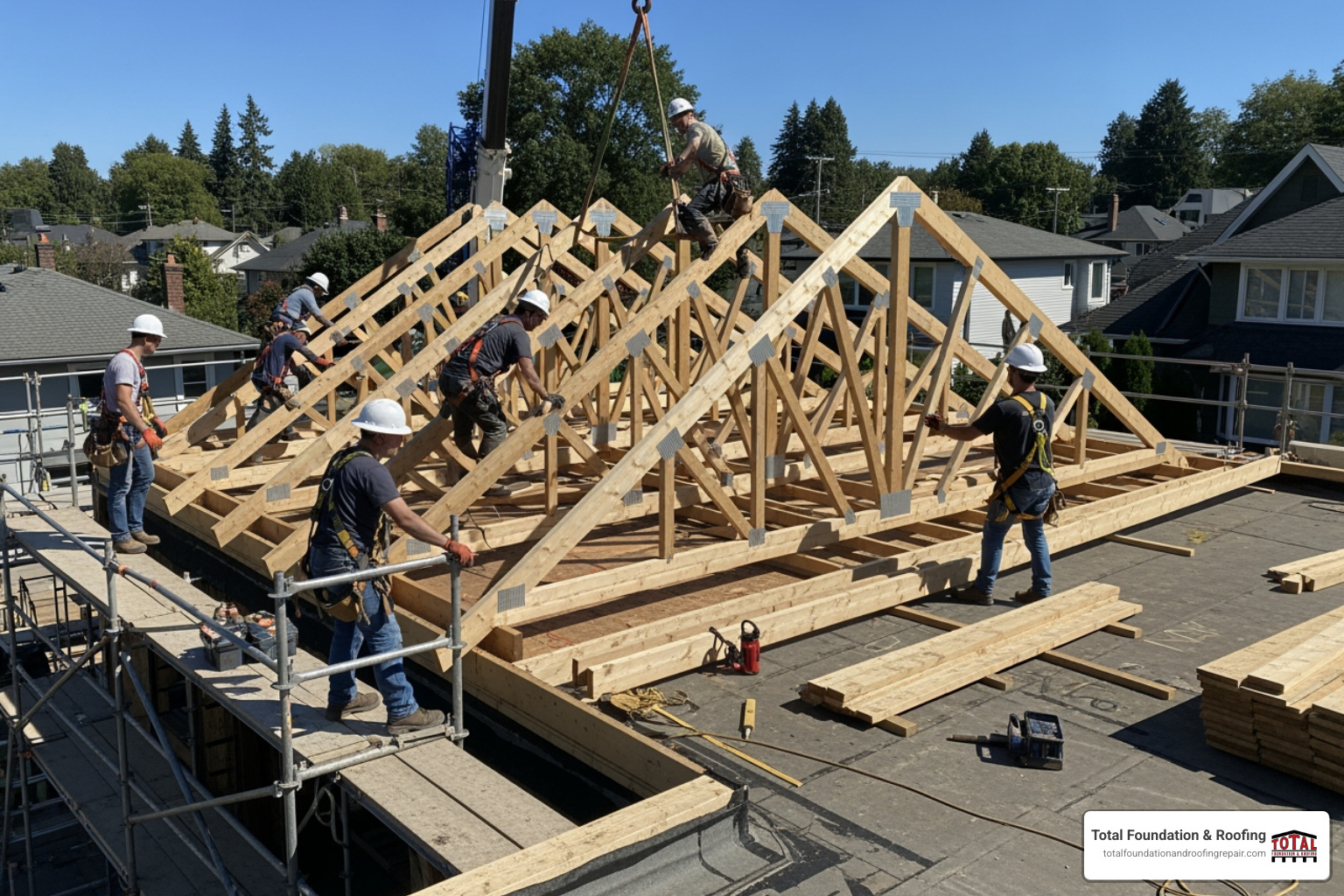
- Framing (Trusses vs. Rafters): The new roof’s framework is built using either pre-fabricated trusses (cost-effective) or on-site rafters (more flexible for creating usable attic space).
- Decking and Underlayment: Plywood or OSB sheathing (decking) is installed over the frame, followed by a waterproof underlayment for moisture protection.
- Installing New Roofing Material: Your chosen roofing material, such as asphalt shingles or metal, is professionally installed.
- Flashing and Ventilation: We install flashing to prevent leaks around chimneys and walls and integrate a proper ventilation system for energy efficiency.
- Finishing (Gutters, Siding, Soffits): The project is completed with the installation of new gutters, downspouts, fascia, and soffits. Siding may be extended if needed.
- Final Inspection: Our team and the local building inspector conduct a final review to ensure the work meets all code and quality standards.
Making the Final Decision for Your Texas Home
The journey of changing a flat roof to a pitched roof is a significant one, offering a blend of practical benefits and aesthetic improvements. For homeowners in the Texas Hill Country, the long-term value of a durable, water-shedding pitched roof often outweighs the initial investment. This change is about making an informed choice that aligns with your home’s needs and your personal priorities.

Why Some Homeowners Stick with Flat Roofs
Despite the compelling reasons to convert, some homeowners choose to retain their flat roofs for good reason. They simply have different characteristics and maintenance requirements.
Here’s why some people stick with them:
- Aesthetic Preference: Flat roofs are a key feature of Modern home design, offering a sleek, minimalist look.
- Lower Initial Installation Cost: Flat roofs are typically cheaper and faster to install, making them a budget-friendly option for new construction.
- Usable Outdoor Space: They provide a unique opportunity for rooftop decks, gardens, or solar panel installation without altering the home’s profile.
- Effective with Proper Installation and Materials: Modern materials (like TPO or EPDM) and proper installation can make flat roofs highly durable, mitigating issues like Flat Roof Storm Damage.
The decision to keep a flat roof often comes down to a balance of architectural vision, budget, and a commitment to diligent maintenance.
Choosing Your Expert Roofing Partner for Changing a Flat Roof to a Pitched Roof
Partnering with a qualified and experienced roofing professional is critical. The structural integrity, safety, and longevity of your home depend on expert execution.
Here’s what to look for when choosing your roofing partner for changing a flat roof to a pitched roof:
- Local Experience: Choose a contractor familiar with Texas Hill Country weather and local building codes in Kerrville, Fredericksburg, and Comfort, TX.
- Proven Track Record: Look for a portfolio of successful flat-to-pitched roof conversions and ask for references.
- Proper Licensing and Insurance: Verify the contractor is fully licensed and insured to protect yourself from liability.
- Structural Expertise: Ensure they work with structural engineers to guarantee safety and compliance.
- Transparent Communication: A good partner keeps you informed throughout the project and provides clear answers.
- Comprehensive Estimates: Expect a detailed, written estimate outlining all costs, materials, and timelines.
- Strong Warranties: Inquire about both material and labor warranties for your new roof.
- Reputation and Reviews: Check online reviews and their standing with organizations like the Roofing Contractors of Texas.
Changing a flat roof to a pitched roof is an investment in your home’s future, offering peace of mind, improved curb appeal, and valuable new space. For a comprehensive evaluation and a reliable quote for your project, we invite you to Request a Free Estimate. We’re here to help you make the right decision for your Texas home.