

The Unseen Threat Beneath Your Feet
Learning how to protect subfloor from moisture is essential for safeguarding your home’s structural integrity. The flooring you see is only as strong as the subfloor beneath it. As a top provider of foundation and roofing solutions in the Texas Hill Country, we know moisture is the primary threat to subfloors, leading to costly problems like warping, mold, and rot.
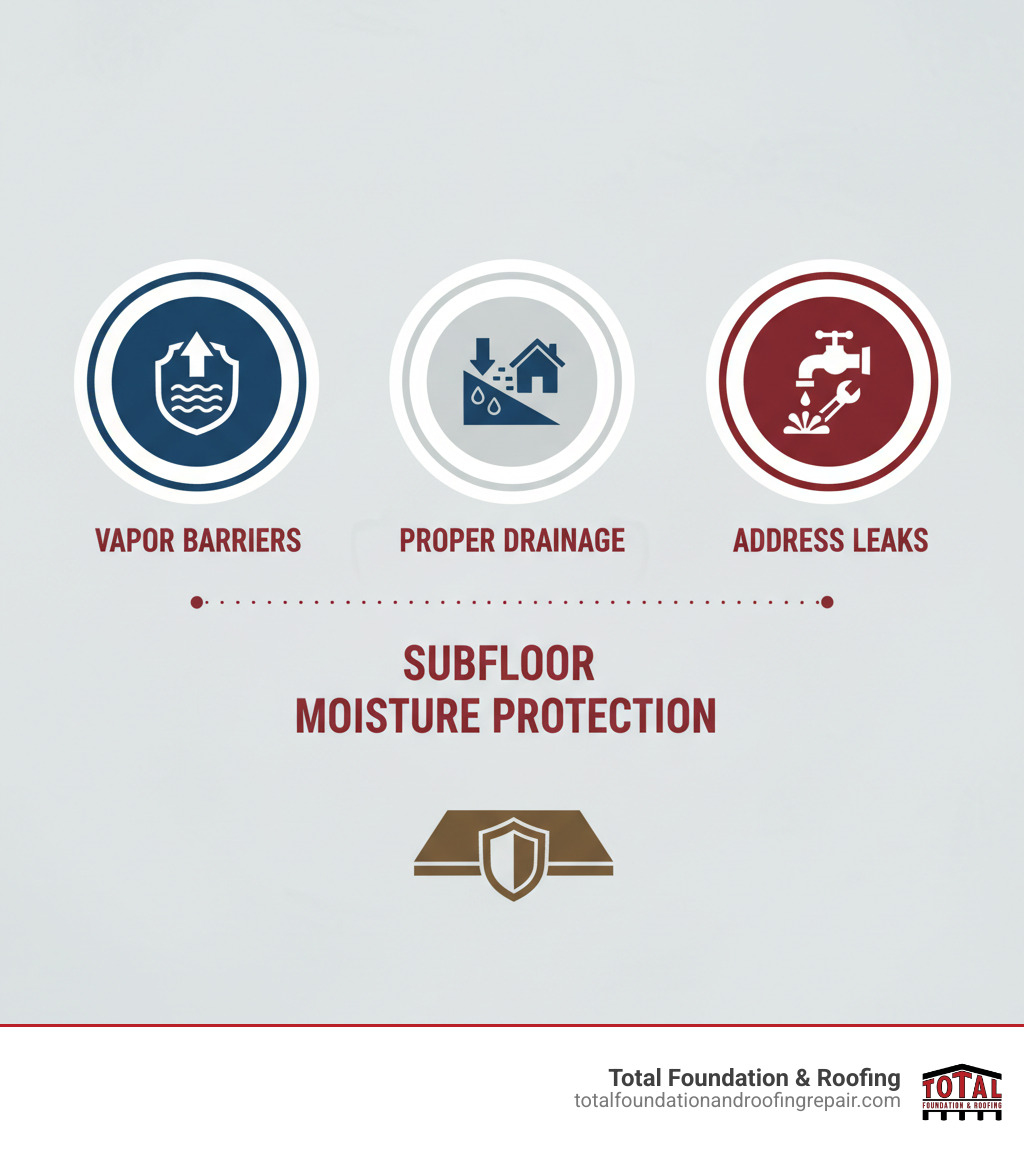
Here are key strategies to protect your subfloor:
- Install Vapor Barriers: Place a vapor retarder over concrete slabs or on the ground in crawl spaces.
- Ensure Proper Drainage: Grade the ground around your foundation to direct water away.
- Encapsulate Crawl Spaces: Seal crawl spaces and use dehumidifiers to control humidity.
- Use Moisture-Resistant Materials: Choose subflooring designed to withstand moisture.
- Fix Leaks Promptly: Immediately address any plumbing, roof, or foundation leaks.
- Dry Thoroughly: Ensure subfloors are completely dry before installing flooring.
This guide offers actionable steps to ensure your home’s longevity and safety. With over 18 years of experience, our team provides expert solutions to keep homes in the Texas Hill Country dry and stable.
A Homeowner’s Guide on How to Protect Subfloor from Moisture
Identifying the Enemy: Signs and Types of Subfloor Moisture Damage
Subfloor moisture damage often goes unnoticed until it becomes a major problem. While a moisture meter provides the most accurate detection, visible signs will eventually appear. Plywood subfloors may swell and look wavy, while Oriented Strand Board (OSB)—a material with specific moisture tolerances as defined by groups like the APA – The Engineered Wood Association—can flake and delaminate at the edges. This trapped moisture often migrates into finished flooring, especially hardwood, causing it to “cup” (edges rise) or “crown” (center bulges).
Be alert for these common signs of subfloor moisture damage:
- Warping or Wavy Floors: An uneven surface, particularly with plywood.
- Edge Swelling: The edges of OSB boards become thicker and softer.
- Soft Spots: Areas that feel spongy underfoot indicate wood rot.
- Discoloration: Dark stains suggest mold or mildew growth.
- Musty Odors: A persistent damp, earthy smell points to mold.
- Increased Squeaking: Warped subfloors can loosen from joists, causing friction.
When moisture from the subfloor enters hardwood, it causes the wood to expand. This leads to cupping, where the plank edges rise higher than the center. If the issue is not resolved, it can lead to crowning, buckling, and permanent damage. Addressing the moisture source is the first step; for example, if the cause is a structural problem, you’ll need to consider professional foundation repair.

Uncovering the Source: Primary Causes of Excess Moisture
To effectively protect your subfloor, you must first identify the source of the moisture. Water can infiltrate your home from several directions. In the Texas Hill Country, high humidity and groundwater are common culprits, but structural issues and leaks are also major contributors.
Primary causes of excess subfloor moisture include:
- Ground Moisture: Water vapor from the soil can wick up through a concrete slab or into a crawl space, a process known as capillary action.
- High Humidity: Humid air, especially in unventilated basements and crawl spaces, can condense on cooler subfloor surfaces.
- Poor Exterior Grading: If the ground slopes toward your house, rainwater will pool against the foundation and seep inside. Effective foundation waterproofing is critical to prevent this.
- Plumbing & Appliance Leaks: Even small, slow leaks from pipes, toilets, or dishwashers can saturate a subfloor over time.
- Foundation Cracks: A small crack in your foundation can allow significant water intrusion, which is why our foundation crack repair services are designed to seal these entry points permanently.
- Construction Moisture: Concrete slabs and wood framing can retain moisture if not allowed to dry completely before flooring is installed.

Proactive Protection: How to Protect Subfloor from Moisture Before It’s a Problem
The best way to deal with subfloor moisture is to prevent it from ever becoming a problem. Proactive measures taken during and after construction can save you from costly repairs down the road.
Key preventative strategies include:
- Ensure Proper Site Drainage: The ground around your foundation must slope away from the house, carrying rainwater with it. Gutters and downspouts should also direct water far from the foundation.
- Encapsulate Crawl Spaces: Sealing the crawl space floor and walls with a heavy-duty vapor barrier isolates your home from ground moisture. This process is a key component of our crawl space encapsulation services, which often include adding a dehumidifier to actively control humidity.
- Control Indoor Humidity: Use dehumidifiers in basements and ensure your HVAC system is properly maintained to manage airborne moisture.
- Acclimate Materials: Allow both the subfloor and finished flooring to acclimate to the home’s indoor environment before installation to prevent expansion and contraction issues.
- Address Foundation Issues Promptly: Repairing cracks and leaks in your foundation is essential. Our foundation services are designed to fix these root causes of moisture intrusion.
The Ultimate Defense: Installing Vapor Barriers and Retarders
A vapor barrier or retarder is a critical defense against moisture migrating from the ground or a concrete slab. While the terms are often used interchangeably, they have a key difference in their permeability.
| Feature | Vapor Barrier | Moisture Retarder |
|---|---|---|
| Primary Function | Blocks water vapor (impermeable) | Slows water vapor (semi-permeable) |
| Permeability (Perms) | Very low (≤ 0.1 perms) | Low to moderate (>0.1 to 1.0 perms) |
| Best For | On or under concrete slabs, crawl space encapsulation | Over wood subfloors (allows breathing) |
For concrete slabs, a true vapor barrier (10-mil to 20-mil polyethylene sheeting) is essential to block moisture that can damage flooring and adhesives. For wood subfloors over crawl spaces, a moisture retarder is often used to slow vapor transmission while still allowing the wood to breathe. Always consult the flooring manufacturer’s guidelines to avoid voiding your warranty.
Proper installation is key to a vapor barrier’s effectiveness. The process involves cleaning the surface, laying the barrier with at least a six-inch overlap at the seams, and sealing all seams and penetrations with compatible tape. The barrier should also run up the perimeter walls. According to industry standards like ASTM E1745, which defines performance criteria for these materials, common installation mistakes include using thin material (<6-mil), failing to seal seams properly, and puncturing the barrier during installation. Never install a vapor barrier over a wet subfloor, as this will trap moisture and accelerate rot.
Fixing the Damage: Effective Methods for Subfloor Moisture Repair
If moisture has already damaged your subfloor, a systematic repair process is required.
- Eliminate the Moisture Source: This is the first and most critical step. Whether it’s a plumbing leak, poor grading, or a foundation issue, the source must be fixed to prevent a recurrence. For foundation-related problems, our concrete crack repair services offer a permanent solution.
- Dry the Area: Remove any finished flooring to expose the subfloor. Use industrial fans and dehumidifiers to dry the area completely, using a moisture meter to verify it has reached an acceptable level.
- Repair or Replace: For small, isolated spots of rot, the damaged section can be cut out and replaced. If the damage is widespread or has caused structural sagging, a full subfloor replacement is necessary.
- Seek Professional Help for Foundation Issues: Subfloor moisture is often a symptom of a larger foundation problem. If you see significant cracks or signs of water intrusion, professional intervention is required to implement permanent concrete slab repair and protect your home in areas like Kerrville, Fredericksburg, or Comfort.
Secure Your Foundation, Protect Your Home
Protecting your subfloor from moisture is a critical investment in your home’s health and value. Proactive measures like proper drainage, ventilation, and vapor barriers are always more effective and less costly than repairs. A dry subfloor ensures your home’s structural integrity and prevents health hazards from mold.
Moisture problems don’t fix themselves—they only get worse. If you’ve noticed musty odors, warped floors, or soft spots, it’s time to act. For homeowners in the Kerrville area and across the Texas Hill Country, the certified experts at Total Foundation & Roofing are ready to help. With over 18 years of experience, we identify the true source of moisture and provide permanent solutions.
Don’t wait for a small issue to become a structural crisis. Whether you need crawl space encapsulation or professional foundation waterproofing, we have the expertise to protect your investment.
Ready to secure your home’s foundation? Schedule a professional inspection with our team, or explore our foundation waterproofing services to learn more.