
Why Your Metal Roof Needs the Right Gutter Installation Approach
Gutter installation on a metal roof demands a specialized strategy compared to traditional shingle roofs. Because metal surfaces shed water faster and more forcefully, a standard gutter system can be overwhelmed, leading to overflow that damages your foundation and landscaping. For homeowners in the Texas Hill Country, getting this right is crucial for protecting homes from top to bottom. The right approach involves using compatible materials to prevent corrosion, spacing brackets closer for stronger support, and using attachment methods that account for the thermal expansion and contraction of metal panels.
Without proper gutters, the rapid runoff from a metal roof can cause soil erosion around your foundation, damage landscaping, and even lead to basement flooding. Key installation considerations include:
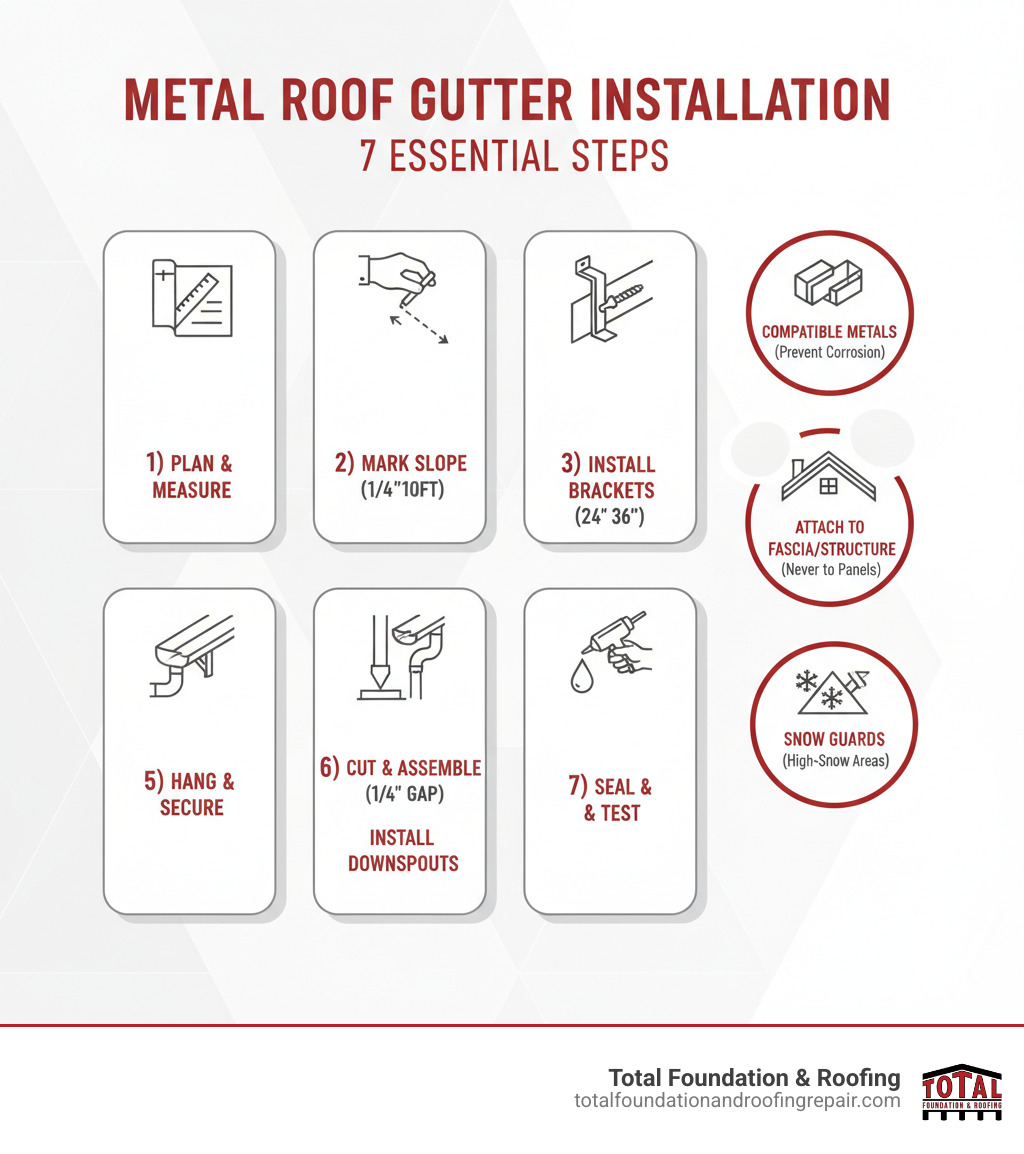
- Secure Attachment: Brackets must attach to the fascia or roof structure, never directly to the metal panels.
- Material Compatibility: Match metals (e.g., aluminum gutters with aluminum roofs) to prevent galvanic corrosion.
- Proper Slope: Ensure a slope of at least 1/4 inch per 10 feet toward downspouts for effective drainage.
- Thermal Movement: The system must allow for the expansion and contraction of the metal roof with temperature changes.
I’m Daniel Sowell, owner of Total Foundation & Roofing Repair. With over 18 years of experience, I’ve seen how a professional gutter installation on a metal roof protects your entire property, while the wrong approach leads to costly, preventable damage.
Basic gutter installation on metal roof glossary:
- metal roof installation
- installing metal roof transition flashing
- metal roof cost per square foot installed
Pre-Installation: Planning Your Metal Roof Gutter System
Proper planning is the most critical phase for gutter installation on metal roof systems. Metal roofs are a fantastic investment, but their unique properties—a slick surface that sheds water with incredible force and significant thermal expansion in the Texas heat—demand a specialized approach to water management.
If gutters are rigidly attached without accounting for this movement, the stress will loosen fasteners and warp materials. Furthermore, many modern metal roofs lack a traditional fascia board, requiring alternative mounting methods like specialized straps that attach to the roof structure without penetrating the panels. You can learn more in our comprehensive metal roof installation guide.
Perhaps the most overlooked risk is galvanic corrosion, which occurs when dissimilar metals (like steel fasteners on aluminum gutters) are in contact with rainwater, causing one to rapidly deteriorate—a process detailed by the Metal Construction Association. Matching your metals is non-negotiable.
Selecting the Best Gutter Materials and Styles
Choosing the right gutter materials and styles is essential for performance and aesthetics.
- K-style gutters are the most popular residential choice. Their decorative shape mimics crown molding, and they offer a high water capacity ideal for handling the rapid runoff from metal roofs.
- Half-round gutters provide a classic aesthetic often seen on historic homes. Their smooth interior helps prevent debris buildup but they have less capacity than K-style gutters.
- Box gutters are custom-built, rectangular gutters that can be integrated into the roofline for a modern look and offer substantial water capacity.
The material you choose directly impacts durability, maintenance, and cost.
- Aluminum is lightweight, rust-resistant, and affordable, making it a popular choice for its balance of cost and durability.
- Galvanized Steel is stronger than aluminum and highly resistant to physical impact, though the protective coating can wear over time.
- Copper is a premium, long-lasting option that develops a beautiful patina over time. It can easily last over 50 years.
- Stainless Steel offers superior strength and corrosion resistance, making it ideal for harsh climates and modern aesthetics.
We do not recommend vinyl gutters for metal roofs, as they cannot handle the forceful water runoff and become brittle in extreme Texas temperatures.
Gutter Material Comparison Table
| Material | Average Cost (per linear foot) | Lifespan (Years) | Corrosion Resistance | Durability Against Impact | Aesthetics |
|---|---|---|---|---|---|
| Aluminum | $3 – $15 | 20-30 | Excellent | Moderate | Wide range of colors |
| Galvanized Steel | $5 – $20 | 20-30 | Good (with coating) | High | Industrial, can be painted |
| Copper | $15 – $40 | 50-100+ | Excellent | High | Patina develops over time, premium look |
| Stainless Steel | $15 – $40 | 50+ | Superior | Very High | Sleek, modern, fewer color options |
| Vinyl | $3 – $7 | 10-20 | N/A | Low | Basic, prone to fading/cracking |
For a durable system, we recommend metal options for metal roofing systems.
Factoring in Climate, Roof Pitch, and Snow Loads
The Texas Hill Country climate, with its intense rainfall, dictates the need for a robust gutter system. The pitch of your roof also affects how fast water travels; a steeper slope increases water velocity, often requiring larger 6-inch gutters instead of the standard 5-inch to prevent overshooting.
While heavy snow is rare in places like Kerrville, Fredericksburg, or Comfort, ice dams can still form during freezes. An ice dam blocks drainage and forces water under the roof, causing damage. For regions with regular snowfall, snow retention systems are essential to prevent snow and ice from sliding off and ripping gutters away. You can find more info about snow retention systems from industry leaders.
Finally, hail protection is a key consideration. Heavy-gauge steel or thick aluminum gutters offer better resistance to hail damage, ensuring the longevity of your investment in our storm-prone region.
The Ultimate How-To for Gutter Installation on a Metal Roof
With planning complete, the focus shifts to precise installation. A successful gutter installation on a metal roof hinges on using the right techniques and materials from the start.
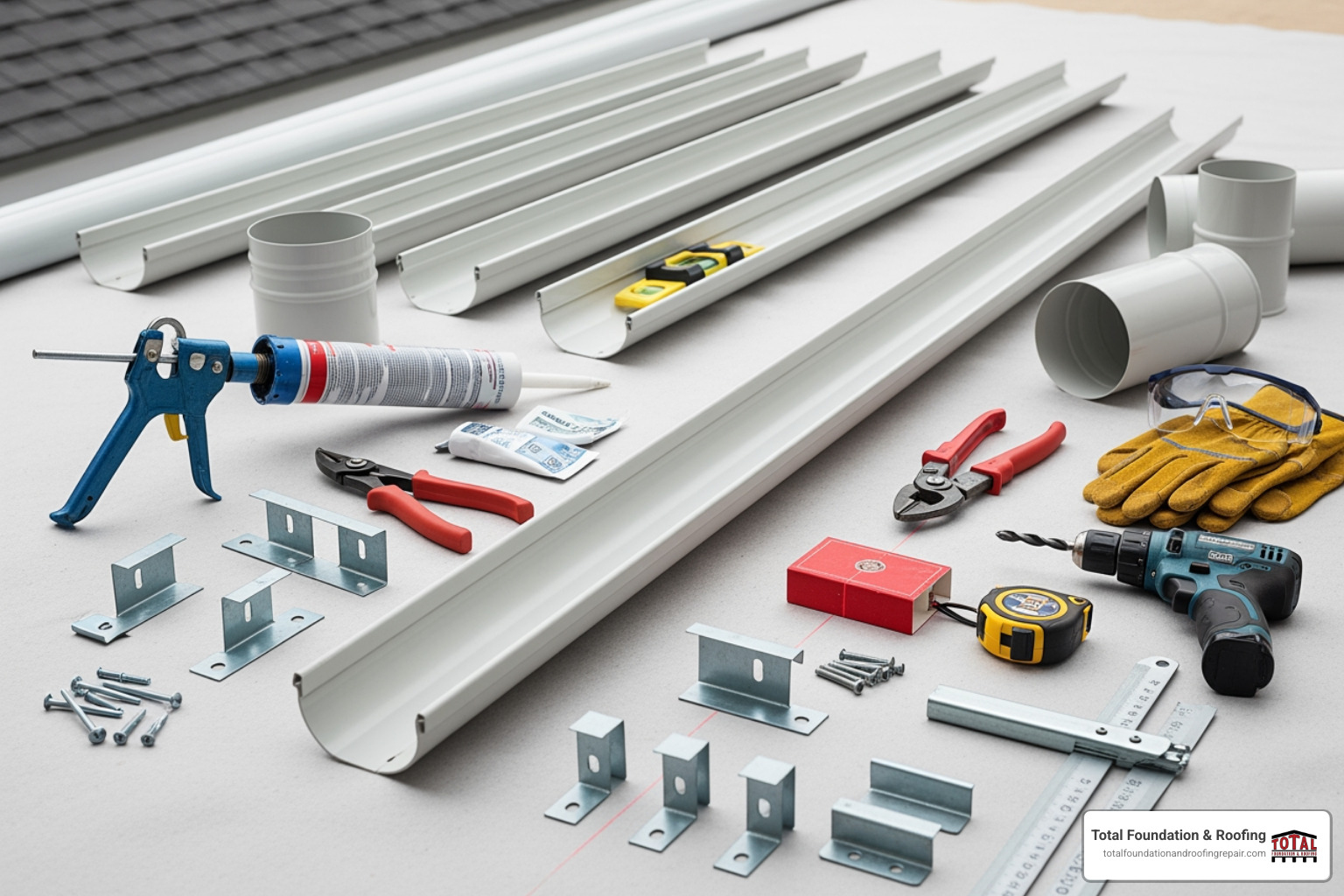
First, gather your tools and materials: seamless gutter sections, downspouts, specialized brackets for metal roofs, stainless steel screws to prevent corrosion, high-quality sealant, a level, and a chalk line. Safety is paramount: use a stable ladder, wear gloves and safety glasses, and never work on a steep or wet roof without proper safety gear.
The installation process follows a clear sequence:
- Plan and Mark: Determine downspout locations. Mark the highest point of the gutter run and snap a chalk line to create a slope of 1/4 inch for every 10 feet toward the downspout.
- Install Brackets: Securely attach brackets every 24 to 36 inches. Use the closer spacing for areas with heavy rain to provide extra support.
- Hang Gutters: Snap the gutter sections into the brackets. Overlap any joints by a few inches, apply a generous bead of sealant on the inside, and fasten them together.
- Attach Downspouts: Cut holes for downspout outlets, seal them thoroughly, and attach the downspouts. Ensure they direct water at least 4 to 6 feet away from your foundation to prevent structural issues.
- Test the System: Run water through the gutters with a hose to check for leaks, pooling, or improper flow. It’s better to find issues now than during a storm. For more on protecting your roof, see our guide on roof repair in Kerrville.
Preventing Common Issues: Leaks, Corrosion, and Ice Dams
Even a well-installed system requires awareness of potential problems.
- Leaks: Prevent leaks by applying a continuous bead of high-quality polyurethane or silicone sealant at all seams, end caps, and outlets before fastening.
- Clogging: Debris is a primary cause of gutter failure. Install gutter guards and clean your gutters at least twice a year to ensure water flows freely.
- Galvanic Corrosion: This silent destroyer occurs when incompatible metals touch. The rule is simple: match your metals. Use aluminum gutters with aluminum fasteners or choose neutral stainless steel fasteners.
- Ice Dams: While less common in Texas, ice dams can form during hard freezes. The best defense is proper attic insulation and ventilation, which keeps the roof surface cold and prevents snow from melting and refreezing in the gutters. For more on total system health, explore our guide on roofing services in Kerrville, TX.
DIY vs. Professional Gutter Installation on a Metal Roof
While a DIY approach can save money on labor, gutter installation on a metal roof carries significant risks. The potential for a fall, causing serious injury, is high. Moreover, mistakes like improper bracket spacing, incorrect slope, or using the wrong fasteners can lead to sagging gutters, leaks, and galvanic corrosion—costly errors that can damage your roof and foundation.
A DIY installation also comes with no warranty. If the system fails during the first major storm, you are responsible for all repairs and any resulting water damage.
Hiring a professional provides numerous advantages:
- Expertise: Professionals understand the specific requirements for metal roofs in the Texas Hill Country.
- Safety: Trained crews have the right equipment and safety protocols to work at heights.
- Correct Installation: Experts guarantee proper slope, material compatibility, and secure attachment, ensuring optimal performance.
- Efficiency: A professional team can complete the job in a day, saving you time and hassle.
- Warranty: Reputable installers back their work with warranties on both materials and labor, giving you peace of mind.
Professional installation is essential for steep roofs, multi-story homes, and complex rooflines. If you’re unsure how to proceed, our Kerrville Roofing Contractors Guide 2025 can help you choose the right partner.
The bottom line: professional installation is an investment in your home’s long-term protection. For a system that’s done right the first time, call us at (830) 201-3211.
Protect Your Investment with Expert Installation
We’ve covered why gutter installation on metal roof systems is a specialized craft. A properly installed gutter system does more than just channel rain—it’s your home’s first line of defense against water damage. It protects your foundation from erosion, prevents landscaping washout, and stops moisture from compromising your home’s structure.
The long-term protection a quality gutter system provides is invaluable, especially when compared to the high cost of foundation repairs and water damage remediation.
At Total Foundation & Roofing, we have over 18 years of experience mastering the unique demands of the Texas Hill Country climate. We understand how intense downpours and temperature swings affect your roof. Our certified workmanship ensures your metal roofing and gutter system function as an integrated unit, using compatible materials and proper attachment methods that account for thermal movement.
Your home’s foundation deserves protection from professionals who understand how all the pieces fit together. Choose expert installation for the peace of mind that comes with knowing your home is ready for whatever Texas weather brings.
For a flawless and durable gutter system that complements your metal roofing, contact our experts today at (830) 201-3211. Let’s protect your investment together.