
Why Choosing the Right Storm Damage Repair Contractor Matters
Storm damage repair contractors are essential partners in restoring your property after severe weather. When hail, high winds, or heavy rain damage your home or business, you need a qualified professional who can assess the damage, work with your insurance company, and complete lasting repairs. Choosing the right team is the first step in protecting your investment and is why homeowners trust our professional roofing and foundation repair services.
Quick Answer: What to Look for in Storm Damage Repair Contractors
- Valid licensing and insurance – Verify they’re credentialed to work in Texas.
- Local reputation – Check BBB ratings and ask for local references.
- Written contracts – Get detailed estimates with specific timelines and warranties.
- Insurance expertise – Choose contractors experienced in claims documentation.
- Emergency availability – Ensure they offer 24/7 response for urgent situations.
Severe weather is a reality in the Texas Hill Country. In 2023 alone, the U.S. experienced 28 weather events that each caused over $1 billion in losses. Hail damage contributes roughly $10 billion in insured losses annually, making it a primary reason homeowners need storm repairs.
After a storm in Kerrville, Fredericksburg, or Comfort, the damage can be overwhelming. Unaddressed issues like water intrusion can lead to mold growth within 24-48 hours, structural weakening, and decreased property value. The period after a storm also attracts transient repair crews who may perform substandard work or disappear entirely. Choosing the wrong contractor can turn a manageable insurance claim into a costly nightmare.
I’m Daniel Sowell, owner of Total Foundation & Roofing Repair in Kerrville, Texas. With over 18 years of experience, I’ve helped hundreds of Hill Country residents steer the complex process of storm damage repair, from documenting damage for insurance to completing lasting repairs that protect their most valuable asset.
Quick storm damage repair contractors definitions:
Your Comprehensive Guide to Hiring Storm Damage Repair Contractors
The period after a storm is stressful, but making informed decisions is crucial to a successful restoration. This guide breaks down the process of finding and working with qualified storm damage repair contractors, ensuring your home is returned to its pre-storm condition safely and efficiently.
Immediate Steps and Identifying Common Storm Damage
Your safety is the top priority after a storm. Before inspecting your property, check for downed power lines or structural instability. Once it’s safe, you can begin documenting the damage.
Common types of storm damage in the Texas Hill Country include:
- Wind Damage: Missing shingles, detached siding, and loose gutters.
- Hail Damage: Dented roofing materials, cracked windows, and damaged siding. Hailstorms cause around $10 billion in insured losses annually in the U.S.
- Water Intrusion: Water seeping inside from a compromised roof or walls, leading to soaked insulation and damaged interiors.
- Foundation Issues: Heavy rainfall can saturate the ground, causing or worsening foundation cracks and settlement. Learn more about home foundation problems to spot the warning signs.
Ignoring storm damage leads to severe consequences like structural weakening, mold growth (which can start in 24-48 hours), reduced property value, and potential insurance claim denials due to neglect. A small leak can quickly become a major reconstruction project. For urgent issues, consider emergency roof repair to prevent further damage.
Your immediate actions are critical:
- Safety Check: Ensure the area is safe before proceeding.
- Damage Documentation: Take clear photos and videos from multiple angles for your insurance claim.
- Temporary Tarping: Cover damaged roof areas to prevent water from entering. Many contractors offer this as an emergency service.
- Contact Your Insurer: Report the damage immediately to start the claims process.
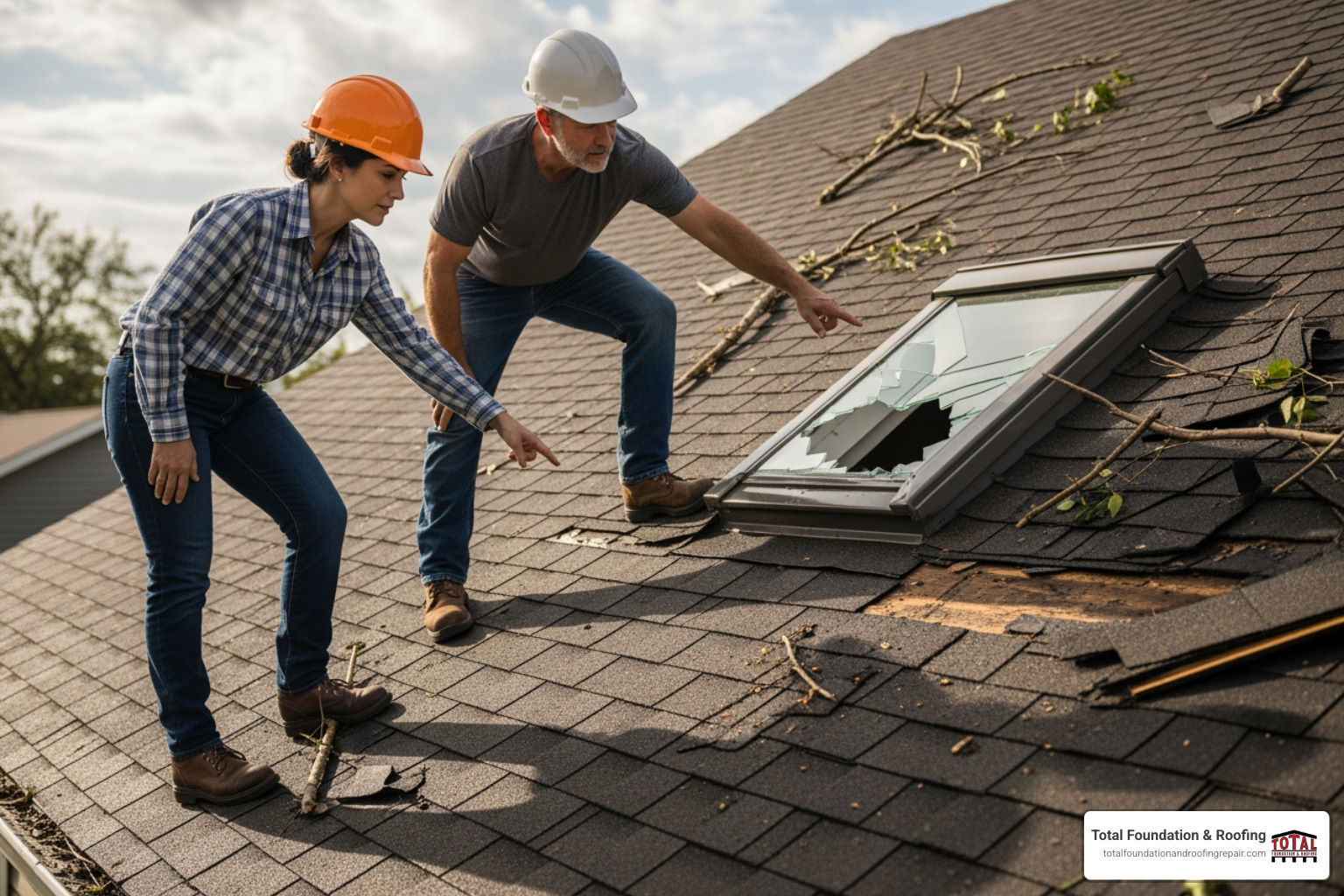
Document common signs of roof damage, such as missing or cracked shingles, dented gutters, water stains on ceilings, granules in downspouts, visible holes, sagging roof areas, damaged flashing, and broken siding or windows.
How to Vet and Select Reputable Storm Damage Repair Contractors
After a major storm, beware of “storm chasers”—transient crews who use high-pressure tactics and may deliver poor-quality work. Choosing a local, established contractor protects you from scams.
Follow this vetting process to find reliable storm damage repair contractors:
- Verify Credentials: Confirm they have current Texas state licenses and carry both liability and worker’s compensation insurance. Ask for proof.
- Check Reputation: Read online reviews and check their rating with the Better Business Bureau.
- Ask for Local References: A trustworthy contractor will provide references from past clients in your area. Contact them to ask about their experience.
- Look for Certifications: For roofing, certifications from manufacturers like GAF indicate a commitment to quality. For water damage, look for IICRC credentials. Find qualified roofing contractors in my area with these qualifications.
Be aware of these red flags:
- High-pressure sales tactics or demands for an immediate decision.
- Requests for large upfront payments before work begins.
- Vague or incomplete contracts.
- Offers to waive or pay your insurance deductible, which is a form of insurance fraud.
The most important qualifications are local experience in the Texas Hill Country, manufacturer certifications, and written warranties for both workmanship and materials. These ensure your repairs are done right and are built to last. Local experience is also crucial for hiring reliable foundation repair contractors.
Understanding Contractor Services and the Repair Process
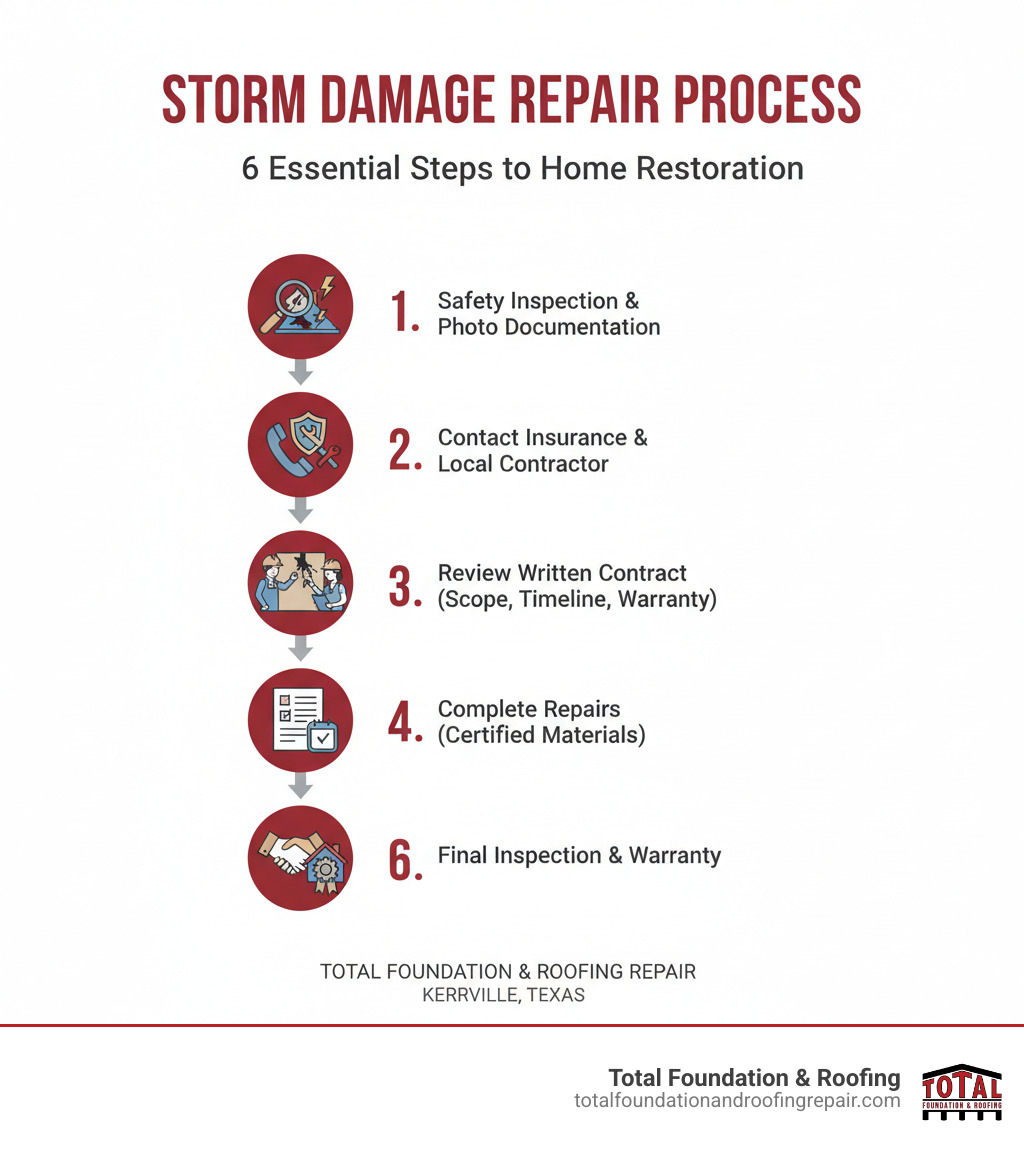
Professional storm damage repair contractors offer a comprehensive storm damage restoration service to bring your property back to its pre-storm condition. Key services include:
- Emergency Board-Up and Tarping: Securing your property immediately to prevent further water and debris from entering.
- Water Extraction and Drying: Using specialized equipment to remove water and thoroughly dry affected areas, preventing mold and structural damage.
- Roof Repair: Fixing leaks, punctures, and missing shingles to ensure your roof is watertight.
- Siding and Gutter Repair: Restoring your home’s exterior and ensuring proper water drainage away from the foundation.
- Foundation Crack Repair: Addressing foundation damage caused by ground saturation.
- Debris Removal and Reconstruction: Clearing storm-related mess and rebuilding severely damaged sections of your property.
Quality contractors guarantee their work with workmanship warranties, conduct a final walk-through to ensure your satisfaction, and adhere to all local building codes. Because storms don’t keep business hours, look for a contractor with 24/7 emergency response teams ready to mobilize quickly. This applies to both residential and commercial roofing services.
Navigating Insurance Claims and Typical Repair Costs
An experienced storm damage repair contractor is an invaluable advocate during the insurance claims process. They can help by:
- Thoroughly documenting all damage with photos and detailed estimates.
- Meeting with the insurance adjuster on-site to ensure no damage is overlooked.
- Helping you understand the claim summary and submitting supplements for any additional damage found during repairs.
This professional assistance is key to getting fair compensation. For more details, see our complete roof repair estimate guide.
Repair costs vary based on the extent of damage, materials, and labor. Here are some typical ranges:
- Minor Repairs: $300 to $1,000 for a few missing shingles or small siding dents.
- Roof Replacement: $5,000 to $15,000+ for extensive damage, depending on roof size and materials.
- Foundation Repairs: A few thousand dollars for minor cracks to tens of thousands for major structural work.
- Water Damage Restoration: A few hundred to several thousand dollars, depending on the severity.
While homeowner’s insurance typically covers storm damage, understanding your deductible and coverage limits is crucial. A good contractor can help you steer your policy. Many offer a free estimate for roof repair to get you started.
Finalizing Your Project and Protecting Your Investment
Once you’ve found qualified storm damage repair contractors and steerd the insurance process, the final phase is putting everything in writing and protecting your home from future storms. A detailed contract and proactive maintenance are your best defense against future problems.
What to Include in Your Written Repair Contract
A detailed written contract is your most powerful protection tool. Never sign a blank or incomplete agreement. Ensure your contract includes these essentials:
- Scope of Work: A crystal-clear description of all tasks to be performed.
- Material Specifications: Exact brands, colors, and quality grades of all materials.
- Total Cost and Payment Schedule: A breakdown of costs and a clear schedule for payments, avoiding large upfront deposits.
- Start and Completion Dates: A realistic timeline for the project.
- Warranty Details: Specifics on both workmanship and manufacturer warranties.
- Lien Waivers: Legal documents provided upon final payment that protect you from liens against your property.
- Contractor’s License and Insurance: The contractor’s license number and proof of current insurance.
- Cancellation Rights: An explanation of your right to cancel, as provided by Texas law. Learn about consumer rights from DATCP for more information.
Preventative Measures for Texas Hill Country Homes
Living in areas like Kerrville, Fredericksburg, or Comfort means preparing for severe weather. These preventative measures can significantly reduce your risk:
- Install Impact-Resistant Shingles: These durable shingles can withstand hail and high winds, and may earn you a discount on your homeowner’s insurance.
- Reinforce Your Garage Door: A reinforced door is less likely to fail during high winds, which can prevent catastrophic roof damage.
- Trim Overhanging Branches: Annually trim large branches near your home to prevent them from falling and causing damage.
- Schedule Regular Roof Inspections: An annual inspection can catch minor issues before they become major problems.
- Clean Gutters and Downspouts: Clear gutters at least twice a year to prevent water backup that can damage your roof, fascia, and foundation.
- Secure Outdoor Items: Before a storm, bring in or secure patio furniture, grills, and decorations.
These measures are part of the comprehensive residential roofing services that protect your home year-round.
If your home has been damaged by a storm, don’t wait. At Total Foundation & Roofing, we’re here to help you through every step of the restoration. For a comprehensive inspection and a free, no-obligation estimate, get started online today. You can also explore our complete storm damage repair services. We are committed to helping our neighbors restore their peace of mind.