
Why Settling Concrete Repair Demands Your Immediate Attention
Settling concrete repair is the process of restoring sunken or uneven concrete slabs by addressing the underlying soil issues that caused the settlement. Ignoring this problem can lead to trip hazards, water damage, and costly structural issues.
Quick Answer: Settling Concrete Repair Options
- Polyurethane Foam Injection: Lightweight foam lifts slabs quickly for same-day use and offers a long-lasting solution.
- Mudjacking (Slabjacking): A cement slurry lifts concrete; it’s more affordable but adds significant weight.
- Complete Replacement: Necessary only for severely damaged slabs with deep structural cracks.
- Cost Savings: Repair typically costs 50-70% less than full replacement.
- Professional Assessment: Always recommended to diagnose the root cause and ensure safety.
Cracks in your driveway or a patio pulling away from your house are warning signs that the ground beneath your Texas Hill Country property is shifting. This settlement occurs when the soil can no longer support the concrete’s weight, a common problem due to the region’s expansive clay soils, which shrink and swell with droughts and heavy rains. What begins as a minor issue can quickly become a safety hazard that diminishes your property’s value.
Fortunately, modern repair methods can restore your concrete without the expense of total replacement. Professional concrete contractors use advanced techniques like polyurethane foam injection to lift and stabilize slabs, often in a single day, saving homeowners up to 70% compared to replacement.
I’m Daniel Sowell, owner of Total Foundation & Roofing Repair. With over 18 years of experience, my team has provided Kerrville homeowners with lasting settling concrete repair solutions, tackling every type of settlement issue the Texas Hill Country presents.
Understanding Concrete Settlement: Causes and Warning Signs
When you notice a crack spreading across your driveway or an uneven sidewalk, your concrete is signaling an underlying problem. In the Texas Hill Country, the ground is in constant flux due to cycles of intense drought and heavy rain. Settling concrete repair becomes necessary when this shifting ground can no longer support your slabs. Addressing it promptly prevents minor issues from escalating into serious safety hazards and costly damage.
Primary Causes of Settling Concrete Slabs
Settling concrete originates from issues with the soil beneath it. Understanding these causes is the first step toward a permanent fix.
- Soil Conditions: The expansive clay soils in the Texas Hill Country are a primary cause. They swell with moisture and shrink during droughts, creating voids beneath concrete slabs. This process is detailed in the U.S. Bureau of Reclamation’s guide on concrete repair.
- Water Intrusion: Water is a silent enemy. Heavy rain or plumbing leaks can erode soil from under your slabs, creating empty pockets where solid support once existed. This is a common reason for needing concrete foundation work.
- Poor Compaction: If the fill soil was not properly compacted during construction, it will naturally compress over time under the weight of the concrete, causing the slab above to sink.
- Other Factors: Heavy loads, such as an RV parked on a standard driveway, can accelerate settlement. Tree roots can also create voids or push slabs upward.
Visible Signs Your Concrete is Settling
Settling concrete displays several clear warning signs that should not be ignored. The sooner you act, the less expensive the repair will be.
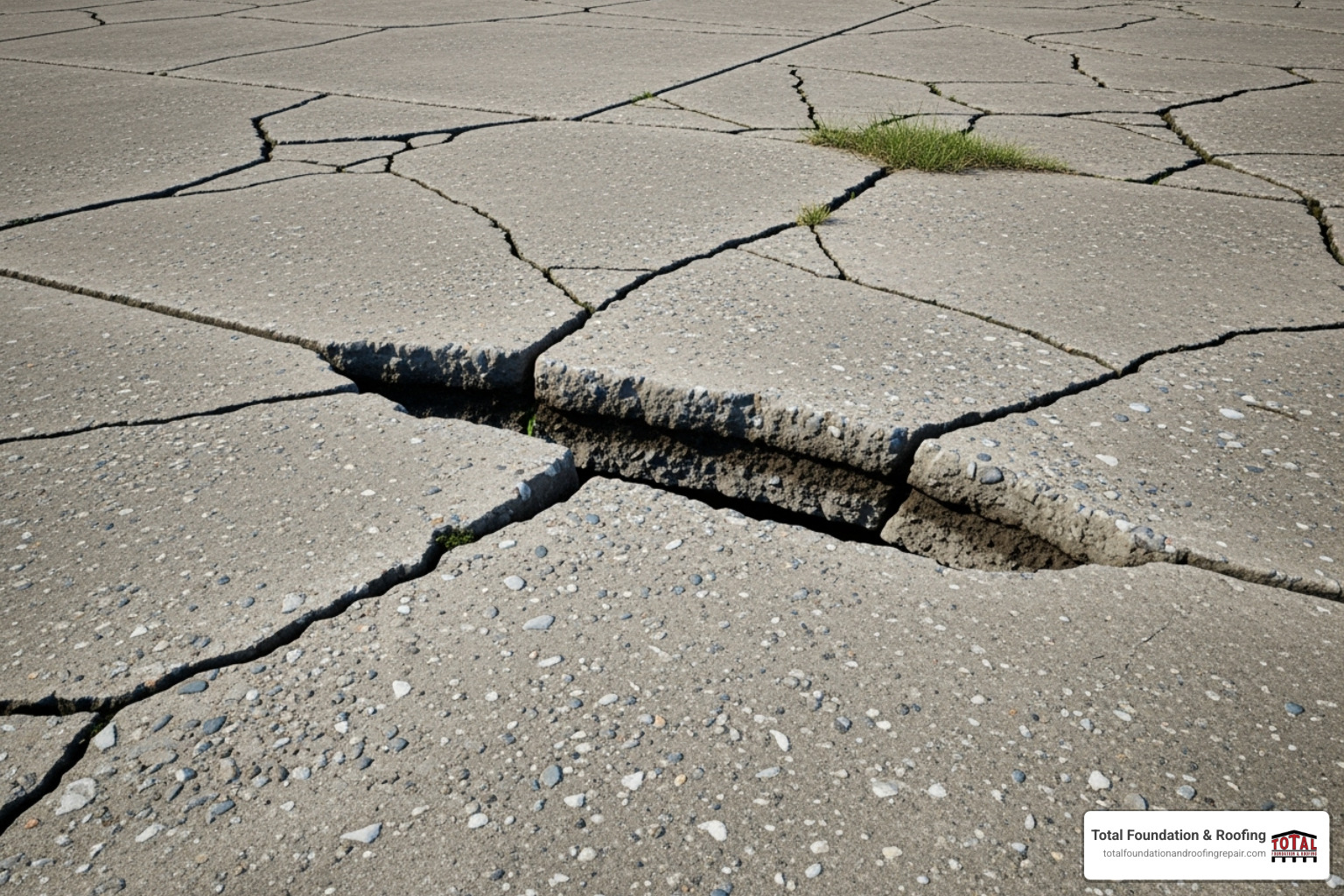
- Uneven Surfaces: A noticeable difference in height between adjacent concrete slabs creates a dangerous trip hazard.
- Widening Cracks: While hairline cracks can be normal, cracks that grow in width or length, especially in a stair-step pattern, indicate significant movement.
- Water Pooling: Water collecting on your concrete after rain shows the slab is no longer level and can worsen soil erosion beneath it.
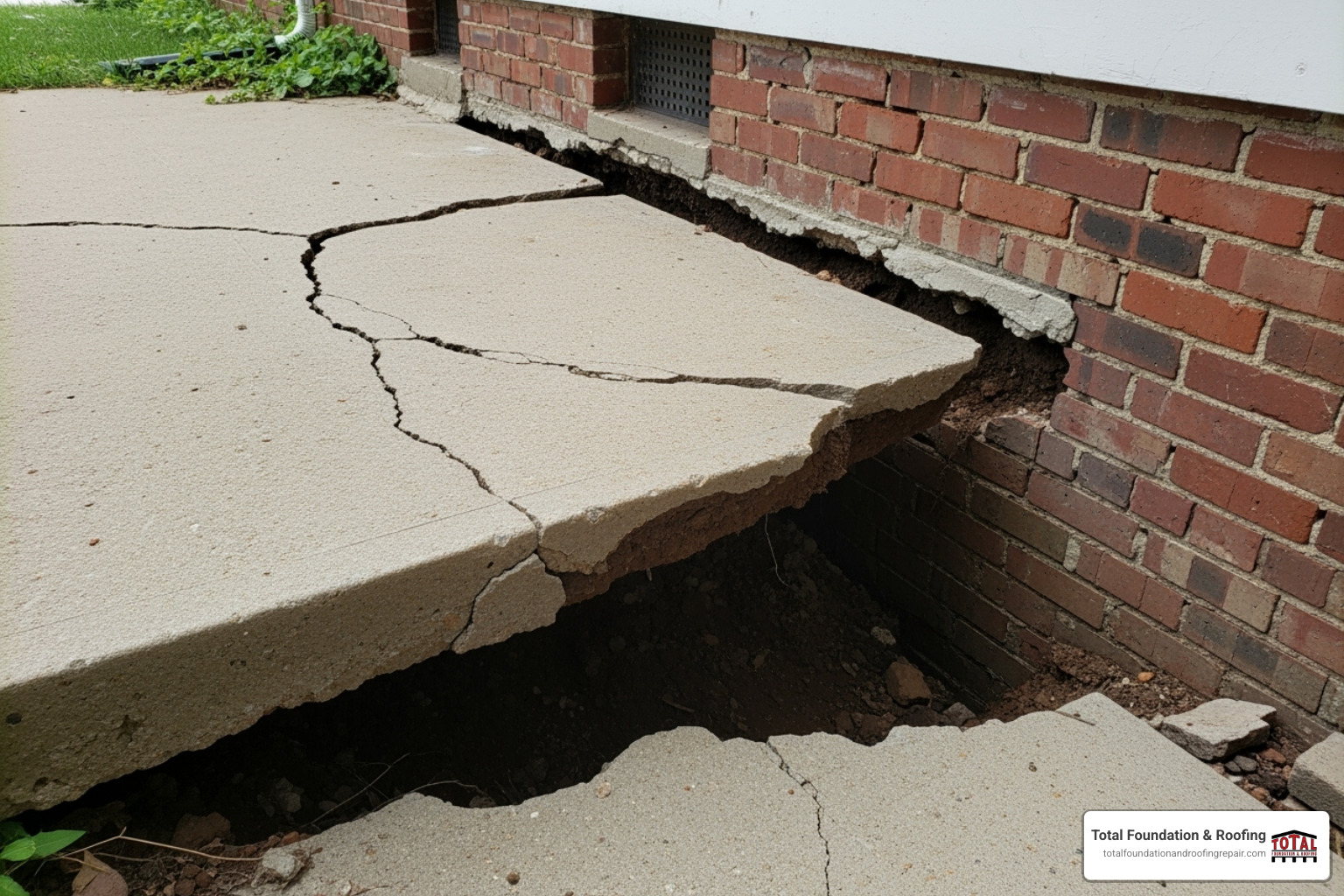
- Gaps: Gaps appearing between slabs or where a patio meets your house foundation are a clear sign that a section is sinking.
- Sinking Steps: Steps that are pulling away from a porch or sinking into the ground are a common indicator of settlement.
Ignoring these signs allows the problem to accelerate, leading to greater safety risks and higher repair costs. Our guide on uneven concrete solutions offers more detail, and for cracks, our complete guide to concrete crack repair explains how to address them properly.
A Homeowner’s Guide to Settling Concrete Repair Methods
Once you’ve identified settling concrete, choosing the right repair method is crucial. The best solution depends on the severity of the settlement and its underlying cause, ranging from professional lifting techniques to complete replacement.
Professional Settling Concrete Repair Solutions
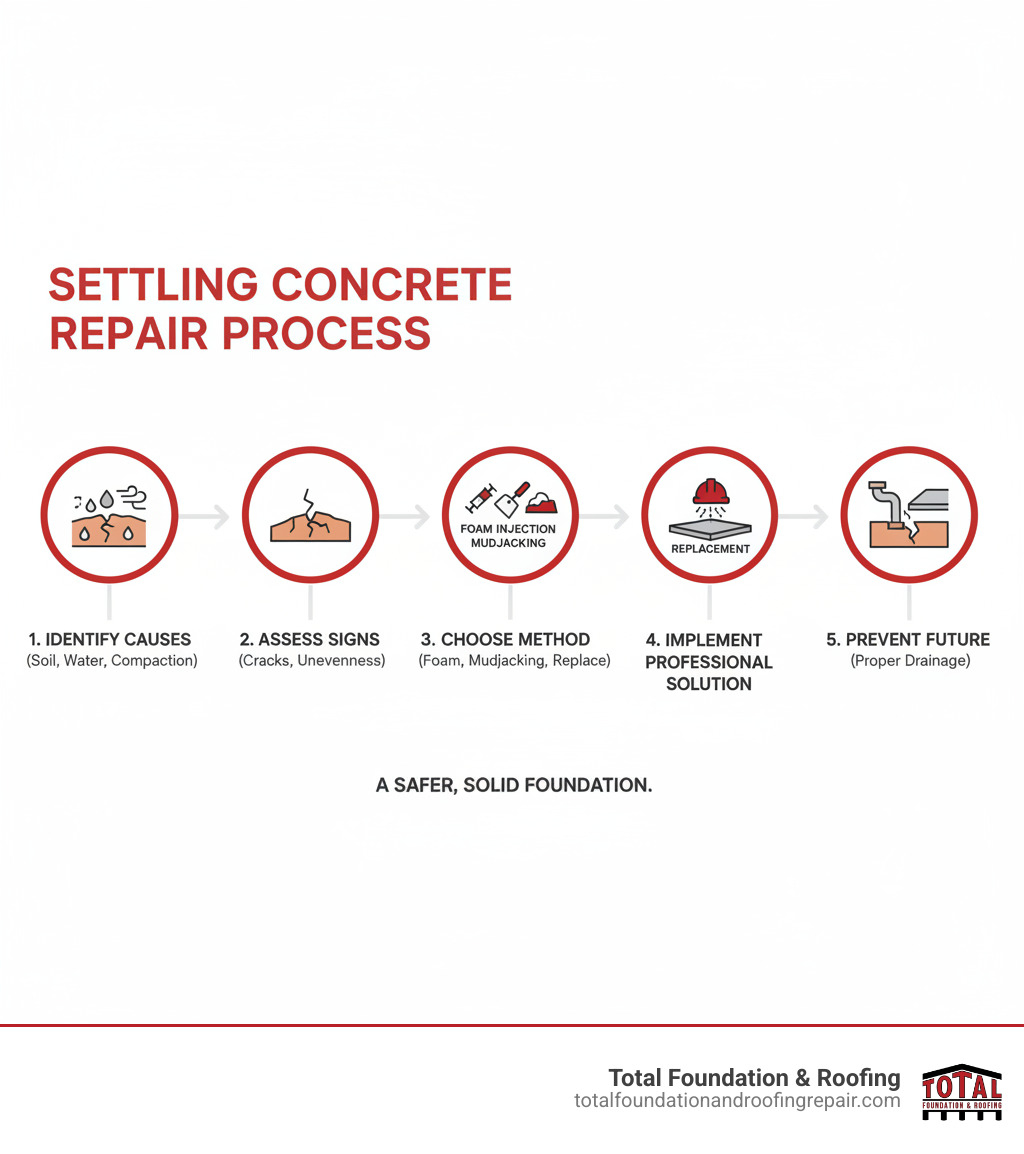
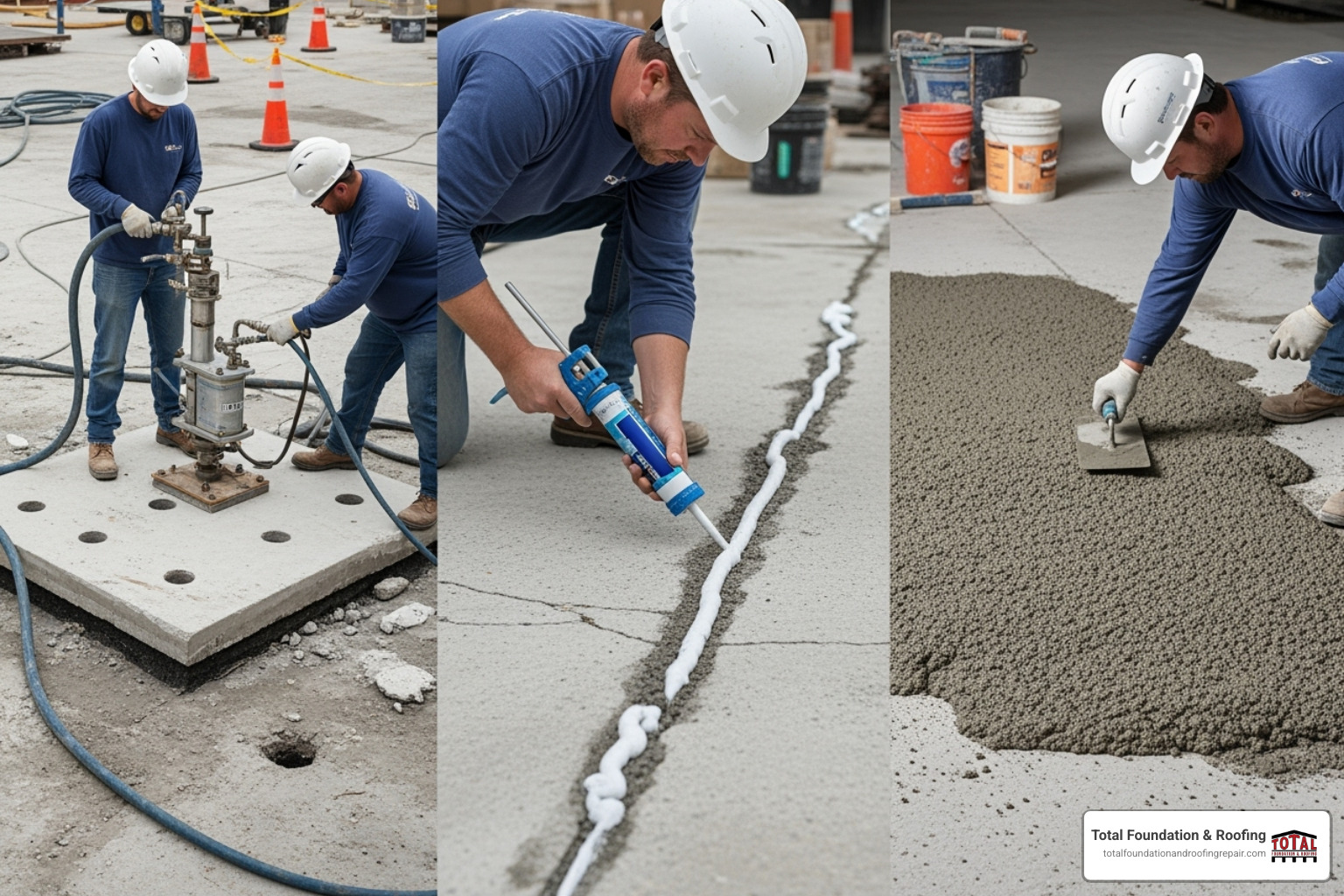
For settled concrete, professional repair is the most effective approach. The two primary methods are polyurethane foam injection and mudjacking, both of which lift the slab by filling voids underneath.
Polyurethane foam injection is the modern standard for concrete lifting services. We drill small, penny-sized holes and inject a high-density foam that expands to lift the slab. This material is lightweight, so it doesn’t stress the soil, and it’s moisture-resistant, preventing future erosion. The process is fast, clean, and the surface is ready for use the same day.
Mudjacking is a traditional method where a cement-based slurry is pumped through larger holes to lift the concrete. While often more affordable, the slurry is heavy and can contribute to future settlement on unstable soil. It also requires a longer cure time.
For most residential applications in the Texas Hill Country, concrete leveling with foam injection offers superior long-term value due to its durability and minimal impact on our expansive clay soils.
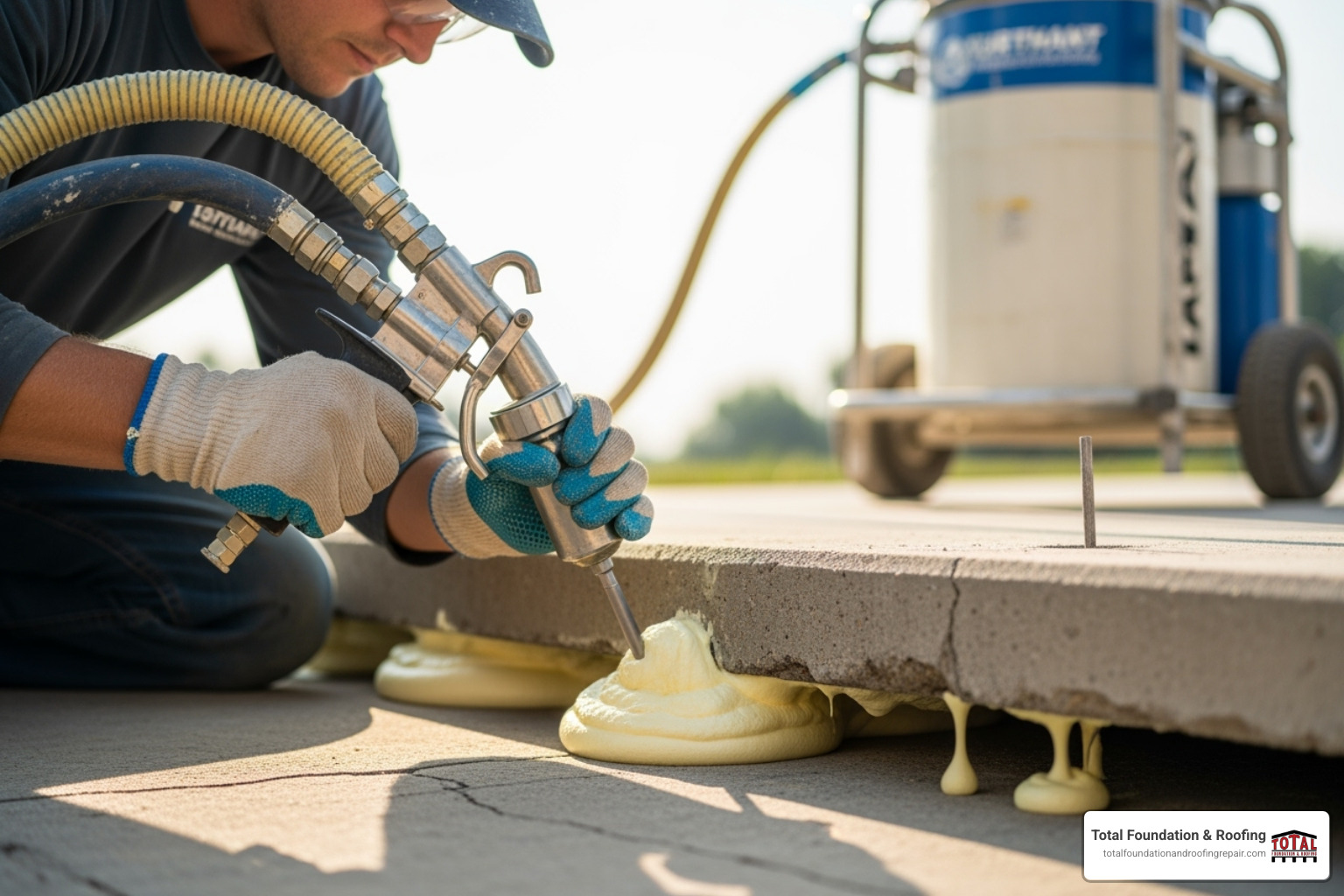
Comparison of Professional Concrete Lifting Methods
| Feature | Polyurethane Foam Injection | Mudjacking (Slabjacking) | Complete Replacement |
|---|---|---|---|
| Cost | Moderate (can be more than mudjacking) | Lower (often 50-70% less than replacement) | Highest (demolition, removal, new pour) |
| Speed/Disruption | Very fast (often a one-day job, same-day use) | Fast (one-day job, but longer cure time) | Slow (multi-day process, 30-day cure) |
| Weight on Soil | Extremely lightweight (minimal added load) | Heavy (adds significant weight to soil) | Heavy (new concrete adds weight) |
| Drill Hole Size | Small (5/8-inch diameter) | Larger (1-inch diameter) | N/A (entire slab removed) |
| Durability | Long-lasting, moisture-resistant, stable | Can be effective, but risk of future settlement higher | New slab, but underlying issues might persist |
| Cleanliness | Very clean, minimal mess | Can be messy with slurry | Very messy (demolition dust, debris) |
| Best For | Most residential/commercial applications, quick turnaround | Large, heavy slabs, budget-conscious | Severely damaged, structurally compromised concrete |
When is Slab Replacement or Resurfacing the Right Choice?
While lifting solves most settlement issues, sometimes the slab itself is too damaged to save.
Complete slab replacement is necessary when concrete is structurally compromised—meaning it’s severely cracked, fragmented, or crumbled. It’s also the solution for catastrophic soil issues like a major sinkhole. However, replacement is disruptive, expensive, and doesn’t guarantee against future settlement if the underlying soil problem isn’t fixed.
Concrete resurfacing is a cosmetic fix. It involves applying a thin overlay to improve the appearance of a stained or discolored slab. Crucially, resurfacing does not fix settlement issues. Applying an overlay to an unstable slab will quickly lead to new cracks. For more details, our guide to concrete slab repair and industry standards like the ACI concrete repair guide (ACI 546R-96) offer further guidance.
DIY Fixes and Preventative Measures for Minor Issues
While major settling concrete repair is a job for pros, homeowners can handle minor issues and take preventative steps.
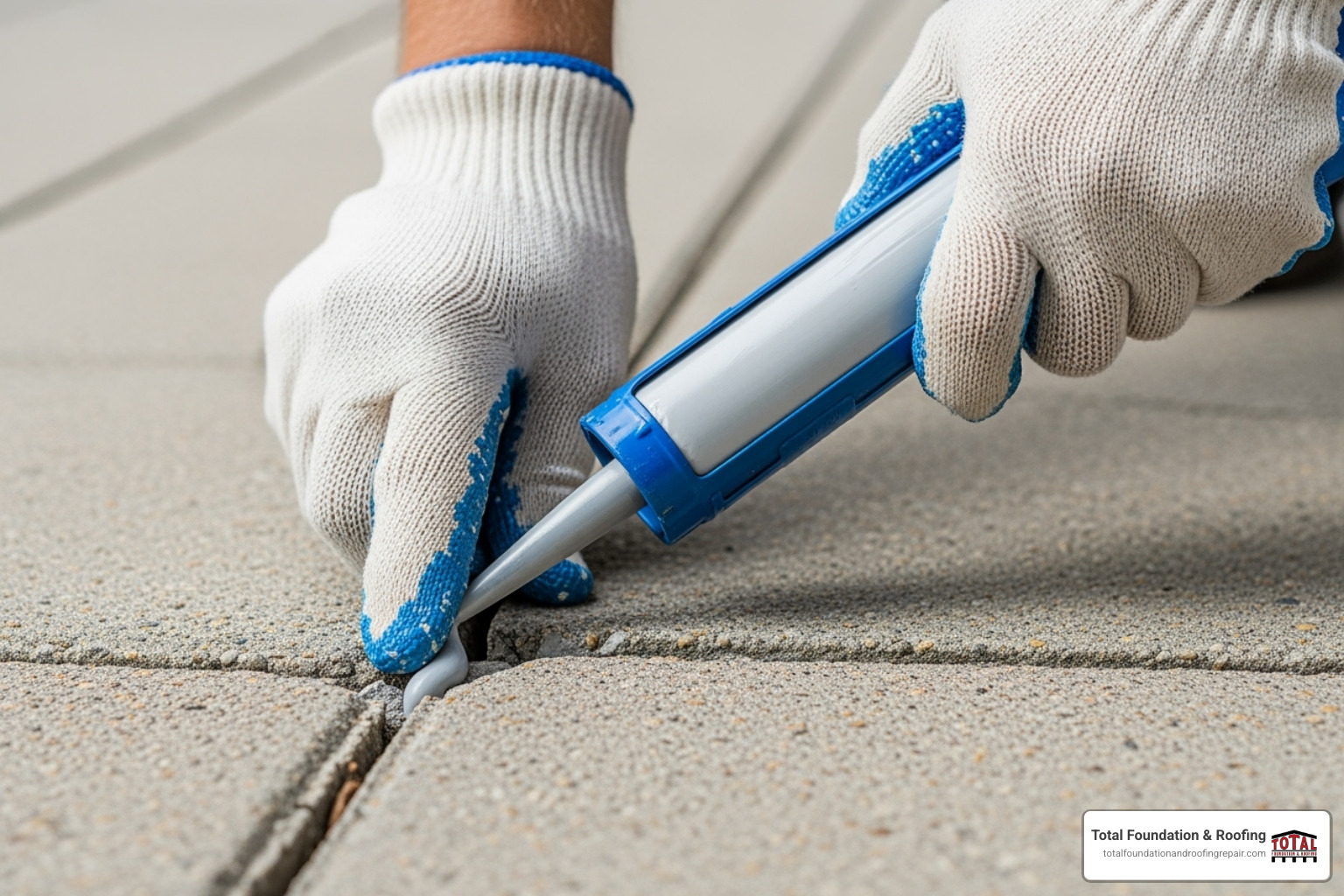
For small, non-structural cracks (less than 1/4 inch), use a flexible concrete crack filler. For slightly larger chips or cracks, a cement-based patching compound can work. However, these are temporary, cosmetic fixes that do not address the cause of settlement.
Prevention is the most effective strategy.
- Ensure Proper Drainage: Grade your landscape to direct water away from concrete. Extend downspouts at least 5-10 feet from your foundation.
- Maintain Soil Moisture: During droughts, use soaker hoses to keep the soil around your foundation from shrinking excessively.
- Manage Tree Roots: Plant large trees a safe distance from concrete slabs.
- Seal Your Concrete: Apply a quality sealer every few years to prevent moisture penetration.
For more tips, see our articles on patching concrete driveways and exploring concrete crack solutions.
Securing Your Property’s Future: When to Call the Experts
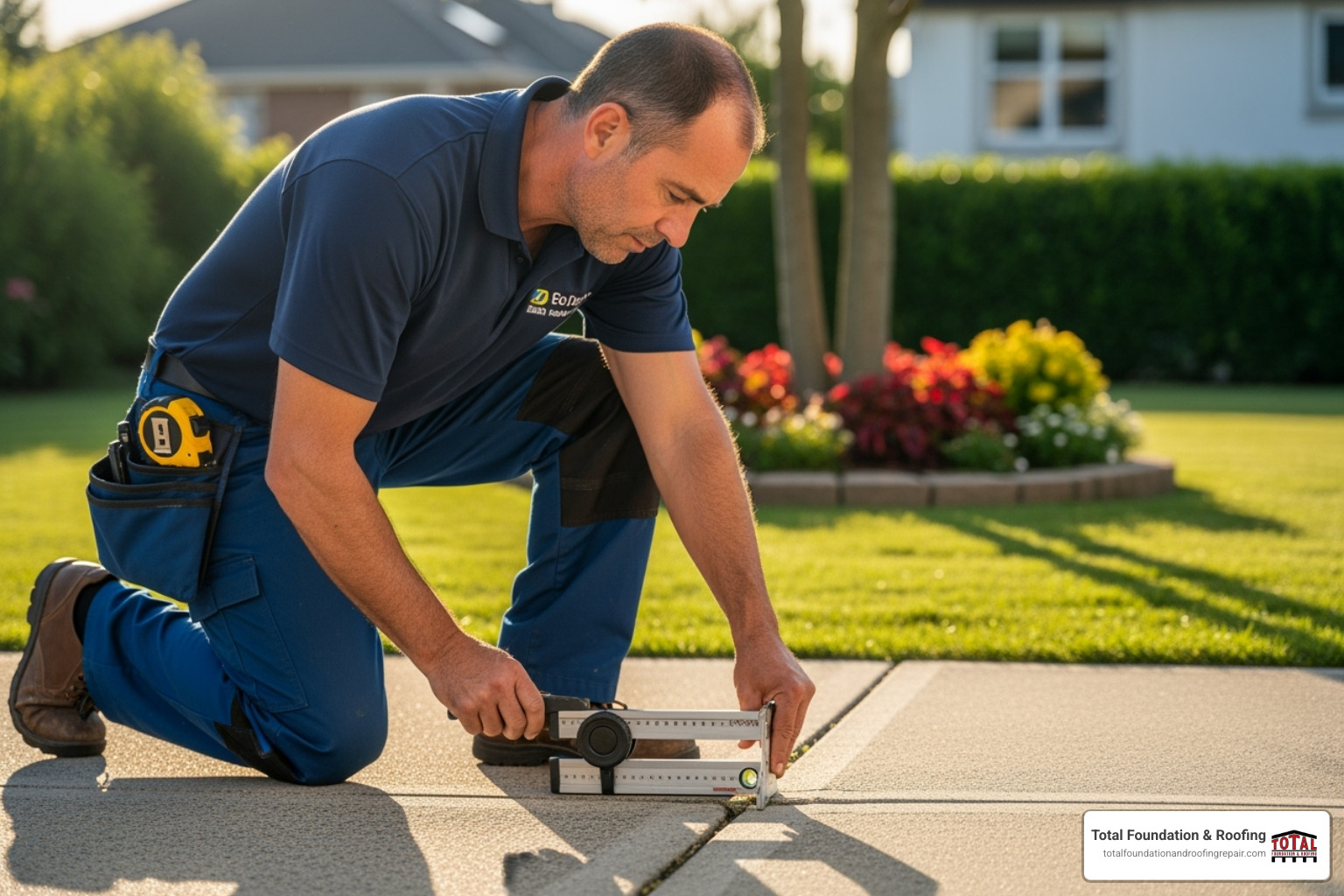
While minor cracks can be a DIY project, settling concrete requires professional intervention to address the root cause. An expert evaluation is the only way to ensure a correct diagnosis and a durable solution that restores your property’s safety and value.
Why Professional Evaluation is Crucial for Settling Concrete Repair
A professional sees more than just a cracked slab; they see the story of what’s happening underground. This is why settling concrete repair demands an expert eye.
- Accurate Diagnosis: We use specialized equipment to identify the exact cause and extent of settlement, which is critical in the Texas Hill Country with its expansive clay soils and unique drainage challenges.
- Long-Term Solutions: Professional methods like polyurethane foam injection don’t just lift the slab; they create a stable, water-resistant base that prevents future problems. This addresses the cause, not just the symptom.
- Safety and Structural Integrity: A professional repair eliminates dangerous trip hazards and ensures the structural integrity of your property, preventing a domino effect of damage.
- Local Expertise: With nearly two decades of experience in the Texas Hill Country, from Kerrville to Fredericksburg, we understand the local soil and climate conditions that cause settlement.
- Cost-Effectiveness: Addressing settlement early with a professional is far cheaper than waiting for catastrophic failure. A minor repair today can prevent a major foundation overall tomorrow. Our guide on concrete repair costs provides a transparent look at potential investments.
Don’t let settling concrete undermine the safety and value of your home. The longer you wait, the more complex and expensive the repair becomes. For a lasting solution to your settling concrete repair needs, schedule your free estimate with a trusted concrete contractor. We’re proud to serve homeowners and businesses throughout the Texas Hill Country, including Kerrville, with the same commitment to quality that’s built our reputation over 18 years.