

Understanding Heaving Concrete Cracks: The Hidden Threat to Your Foundation
Heaving concrete cracks are a serious foundation issue that occurs when the soil beneath your concrete slab expands and pushes the slab upward, causing it to crack and become uneven. If you’re seeing cracks in your basement floor, uneven surfaces, or doors that suddenly won’t close properly, you’re likely dealing with concrete heaving. As a leading provider of foundation repair in the Texas Hill Country, we’ve seen how this problem can escalate if not addressed promptly. This upward movement is the direct opposite of foundation settlement, and it requires a completely different diagnostic and repair approach to solve permanently.
Quick Answer: What Causes Heaving Concrete Cracks?
- Expansive clay soil absorbing water and swelling (common in Texas).
- Frost heave from freezing water expanding by 9% beneath the slab.
- Plumbing leaks depositing moisture under the foundation.
- Poor drainage allowing water to pool beneath concrete.
- Tree roots pushing against and lifting the slab.
Key Signs of Heaving:
- Cracks forming triangular or loop patterns.
- One side of the crack is higher than the other.
- Floors that feel sloped or uneven.
- Doors and windows that stick or won’t close.
- Gaps appearing between walls and the floor or ceiling.
Unlike settling (where concrete sinks), heaving pushes concrete upward. This distinction is critical because the repair approaches are completely different. Misdiagnosing the issue can lead to ineffective repairs and wasted money.
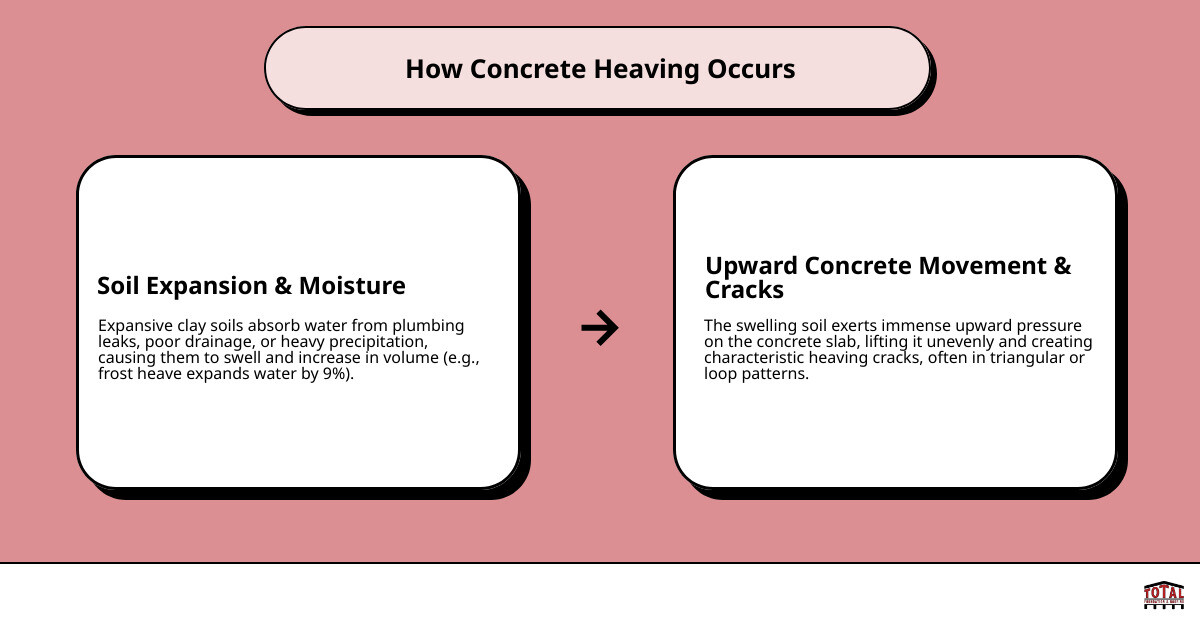
Key terms for heaving concrete cracks:
Primary Causes of Concrete Heaving in Texas
Understanding why your concrete is heaving is the first step toward a lasting solution. In the Texas Hill Country, several environmental factors make properties susceptible to heaving concrete cracks.
1. Expansive Clay Soils: The Texas Challenge
Our region is known for its clay-rich soils, which contain minerals that absorb moisture like a sponge and expand significantly. When this soil dries, it shrinks. This constant cycle of expansion and contraction, known as shrink-swell potential, creates immense pressure on your foundation, leading to heaving. According to the USDA’s Web Soil Survey, many parts of Texas have soils with high clay content, making this the number one cause of foundation problems in the state. This clay-rich soil expands significantly when it gets wet, exerting upward pressure that can cause severe damage.
2. Frost Heave: When Water Turns to Ice
While less common than in colder climates, frost heave can still occur in Texas during severe freezes. When water in the soil freezes, it expands by about 9%, creating a powerful upward force that can lift concrete slabs. For this to happen, three conditions must be met: freezing temperatures, water, and frost-susceptible soil. The problem is exacerbated in unheated structures like garages or beneath exterior slabs. This repeated freeze-thaw cycle is a major contributor to heaving concrete cracks and structural damage, especially if your foundation isn’t built below the regional frost line.
3. Plumbing Leaks: Hidden Water, Visible Damage
A hidden plumbing leak beneath your slab can saturate the soil over time, causing it to swell and push upward on your concrete. Even a slow drip from a water supply line or a small crack in a sewer line can deposit hundreds of gallons of water into the soil over months, creating a localized area of intense pressure. We’ve seen many cases where seemingly minor leaks have led to significant structural issues, requiring comprehensive Uneven Concrete Repair.
4. Poor Drainage and Heavy Precipitation
If your property has poor drainage—clogged gutters, improper grading, or downspouts that release water too close to the foundation—heavy rain can cause water to pool and seep into the soil beneath your slab. The ground should be graded to slope away from your home, directing water away from the foundation. Without proper drainage, water accumulates in the soil, causing it to expand and lead to heave.
5. Tree Roots: Nature’s Force
Large trees planted too close to your home can cause heaving. Their roots seek moisture and can absorb it from under your foundation, causing the soil to dry and shrink unevenly. In some cases, the roots themselves grow large enough to physically push the concrete upward, causing cracks and uneven surfaces. A mature oak tree’s roots can extend two to three times the width of its canopy.
6. New Construction Process: A Foundation for Future Problems?
During construction, the soil around and under the foundation is often excavated and exposed, causing it to dry and shrink. When moisture is reintroduced through rain or irrigation, the rehydrated soil can swell dramatically, leading to heaving. This is particularly common if the soil wasn’t properly compacted during the build. That’s why professional Foundation Repair Kerrville TX often begins with understanding the property’s history.
Identifying and Repairing Heaving Concrete Cracks
Catching heaving concrete cracks early can save you from a world of headaches—and a hefty repair bill. These aren’t just cosmetic issues; they are red flags signaling underlying structural problems that demand immediate attention. A small crack today can become a major structural failure if the source of the upward pressure is not identified and resolved.
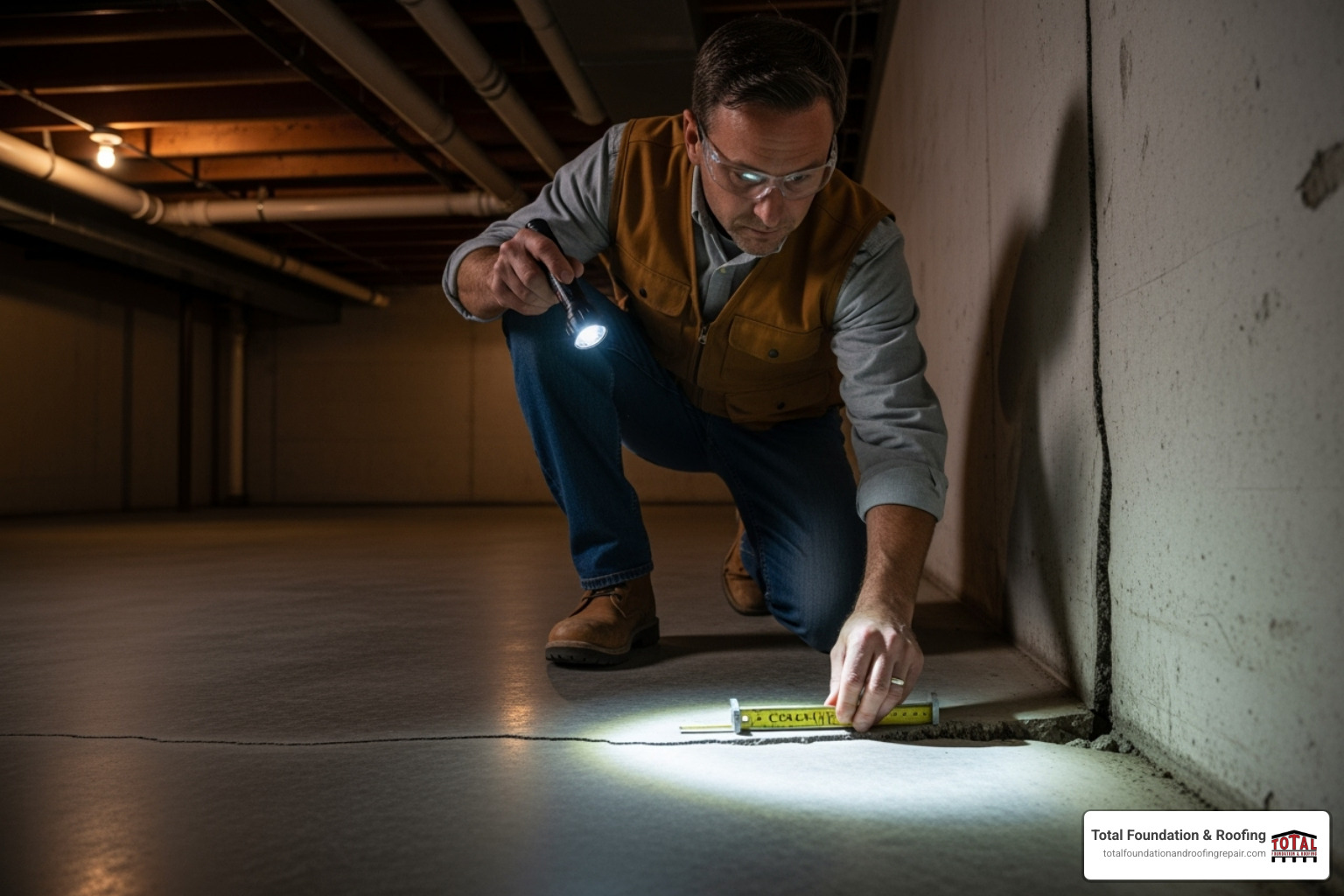
When our team from Total Foundation & Roofing inspects a property, we’re reading your home’s story. The cracks, floor slopes, and sticking doors all tell us what’s happening beneath the surface. What might look like random damage to you reveals clear patterns to our experienced eyes.
Common Signs of Heaving Concrete Cracks in Your Home
Your home communicates its problems; you just need to know the signs. The earlier you recognize these warnings, the simpler and more affordable the fix will be.
- Cracks in floors and walls: Look for cracks in triangular shapes or enclosed loops, which often point to the center of the heave. On walls, vertical or diagonal cracks that are wider at the top or bottom suggest upward pressure from below.
- Uneven or sloped floors: A noticeable “hump” in the middle of a room is a classic sign of heaving. You might notice furniture wobbling or a ball rolling to one side of the room. If the floor feels uneven, it likely is.
- Sticking doors and windows: Doors and windows that suddenly become difficult to open or close indicate that the frame has shifted due to foundation movement. You may also see cracks emanating from the corners of door and window frames.
- Gaps between walls and floors or ceilings: As the floor pushes upward, it can separate from the walls or push them up, creating visible gaps. These gaps are often accompanied by drywall cracks or nail pops.
- Visible displacement of slab sections: This creates a “step” where one part of the floor is higher than another, posing a significant trip hazard. This is a clear sign of advanced heaving.
- “Tenting” of concrete: This occurs when the slab lifts in the middle, resembling a tent. This distinctive shape is a clear sign of upward pressure and is often seen along control joints in a garage or basement.
If you notice any of these signs, don’t wait. Early diagnosis is crucial. Understanding these symptoms is the first step toward finding the right Foundation Crack Solutions.
Potential Repair Methods for a Heaved Concrete Slab
Once we’ve identified the cause and severity of your heaving concrete cracks, we can develop a custom repair strategy. There is no one-size-fits-all solution, as every home is unique.
- Addressing the moisture source: This is always the first step. If plumbing leaks are the cause, they must be repaired. For poor drainage, we may recommend regrading your yard, installing French drains, or adjusting downspouts. You can’t stop the heaving until you control the water.
- Slab replacement: When the concrete is severely damaged and broken into multiple pieces, the best solution is often to remove the old slab, address the underlying soil issues (such as moisture control and re-compaction), and pour new, properly reinforced concrete.
- Underpinning with piers: For foundation-level problems where the perimeter of the home is affected, we can install helical piers deep into the ground to reach stable soil or bedrock. These piers are screwed into the ground like giant corkscrews, transferring the home’s weight to solid ground and preventing future movement.
- Concrete lifting with foam injection: This is a less invasive method for slabs that are heaved but still structurally sound. We inject high-density, two-part polyurethane foam beneath the concrete through small, drilled holes. The components mix and expand, which expands to lift the slab back to its original position and fill any voids. Learn more about Concrete Lifting with Foam Injection.
- Grinding high spots: For minor heaves on outdoor surfaces like sidewalks or patios, grinding down the raised section can eliminate the trip hazard. However, this is a cosmetic fix and doesn’t address the underlying cause of the soil movement.
- Monitoring heave arrestment: In some cases, especially when seasonal moisture changes are suspected, we may apply plaster patches over cracks to monitor for further movement over several months. If the patches remain intact, the heaving has likely stopped. If they crack, the soil is still active. This approach ensures we don’t perform major repairs on a still-shifting foundation. The Portland Cement Association‘s research on types and causes of concrete deterioration confirms that understanding the root cause is critical before implementing any repair strategy. For a complete overview of slab issues and solutions, check out our Concrete Slab Repair Complete Guide.
Long-Term Consequences of Ignoring Heaving Concrete Cracks
Ignoring heaving concrete cracks can lead to a cascade of problems, turning a manageable issue into a structural crisis.
- Worsening structural damage: Continued heaving transfers stress throughout your home’s structure, affecting load-bearing walls, the foundation, and even the roof. This can lead to new cracks, warped door frames, and compromised structural integrity.
- Increased repair costs: The longer you wait, the more extensive and expensive the repairs become. A simple crack repair can turn into a full slab replacement and underpinning project, costing tens of thousands of dollars.
- Plumbing and electrical system damage: Heaving concrete can crush or rupture utility lines under your slab. A broken sewer line can cause unsanitary backups, while a damaged water line can accelerate soil swelling and lead to catastrophic water damage, gas leaks, or electrical hazards.
- Safety hazards: Uneven floors and raised concrete edges create significant tripping hazards, especially for children and the elderly. A simple fall can lead to serious injury.
- Decreased property value: Foundation issues are a major red flag for potential buyers and can significantly lower your home’s market value or make it difficult to sell. Most lenders will not approve a mortgage on a home with known, un-repaired structural defects.
- Water intrusion and mold growth: Cracks in the slab provide a pathway for moisture, leading to dampness, musty odors, and the growth of harmful mold and mildew, which can impact your family’s health.
Don’t let these problems compromise your home’s safety and value. For more guidance on maintaining a healthy foundation, explore our Foundation Repair Advice Guide.
Protect Your Foundation: Next Steps for Homeowners
Understanding heaving concrete cracks is the first step, but taking action is what truly protects your home. If you’ve noticed any signs of heaving, from uneven floors to sticking doors, it’s time to act. The problem will not resolve itself; it will only worsen with time and continued exposure to moisture.
While some home repairs are suitable for a DIY approach, foundation issues are not among them. The complexities of soil mechanics, hydrology, and structural engineering require professional expertise. A misdiagnosis can lead to incorrect repairs, wasted money, and potentially worsening the problem. For example, attempting to patch a heaving crack with epoxy without addressing the underlying moisture issue is like putting a bandage on a broken bone—it hides the symptom but does nothing to fix the root cause.
At Total Foundation & Roofing, we understand that your home is your most significant investment. Our certified team has over 18 years of experience diagnosing and repairing foundation issues specific to the Texas Hill Country’s challenging soil conditions. We don’t offer one-size-fits-all solutions; instead, we conduct thorough inspections to identify the root cause of your heaving concrete cracks and develop a lasting repair strategy.
Professional diagnosis involves using specialized equipment, such as a laser level or a manometer, to measure floor elevations with precision. We identify hidden moisture sources through plumbing tests and visual inspection of your property’s drainage. This data-driven approach is crucial, as treating heaving like settling (or vice versa) will not solve the problem and can lead to further damage.
The longer you wait, the more severe and costly the damage becomes. What starts as a minor crack can evolve into a major structural failure, threatening your family’s safety and your home’s value. Don’t risk the integrity of your home on a guess. Take decisive action to protect your investment.
For a definitive assessment and a custom solution designed for your property, contact us. We’ll schedule a comprehensive inspection, explain our findings clearly, and provide you with a straightforward plan of action. There’s no pressure, just honest expertise and a commitment to doing the job right. Schedule your professional crack repair service today and let us help you secure your home’s future with solutions built to last.