

Why Your Foundation Matters More Than You Think
Concrete foundation services are the bedrock of a safe, stable, and valuable property. A solid foundation does more than just hold up your house; it protects your most significant investment from the ground up. In the unique environment of the Texas Hill Country, where expansive clay soils and dramatic weather shifts are the norm, local expertise is not just a benefit—it’s a necessity. Choosing the right partner for your foundation and concrete services is the critical first step in ensuring a lasting solution rather than a temporary fix that leads to recurring problems and escalating costs.
Quick Guide to Concrete Foundation Services:
- New Construction: This involves creating the initial base for a new building, including slab, crawl space, and basement foundations. The process includes site preparation, formwork, and pouring concrete to precise engineering specifications.
- Foundation Repair: This addresses existing issues like settlement or upheaval. Common methods include piering (installing supports), underpinning (strengthening the base), crack repair, and leveling uneven slabs.
- Waterproofing: Essential for preventing moisture intrusion, this service includes installing drainage systems like French drains, applying moisture barriers, and sealing cracks and joints to keep basements and crawl spaces dry.
- Inspection: A professional assessment is the first step in diagnosing problems. An expert evaluates warning signs to identify the root cause of damage and recommend the most effective repair strategy.
- Average Repair Cost: While costs vary, most repairs range from $2,000 to $7,000. The final price depends on the extent of the damage, the chosen repair method, and property accessibility.
Concrete is the preferred material for 70-80% of new homes due to its exceptional durability, stability, and resistance to moisture, pests, and fire. However, even this robust material is vulnerable to soil and water pressure. If you notice tell-tale warning signs like wall cracks, uneven floors, or sticking doors, it’s a clear signal that your foundation needs professional attention.
I’m Daniel Sowell, owner of Total Foundation & Roofing Repair. With over 18 years of dedicated experience in the Texas Hill Country, my team and I have protected hundreds of local properties by providing expert foundation solutions tailored to our region’s demanding conditions.
Understanding the language of concrete foundation services empowers you to have more effective conversations with contractors. Familiarizing yourself with terms like piering, underpinning, and hydrostatic pressure will help you better understand the proposed solutions for your home. Key services to know include basement crack repair, which seals entry points for water, and a commercial foundation inspection, which involves a detailed structural assessment for larger buildings. When you search for foundation contractors near me, knowing this vocabulary ensures you can vet their expertise and fully grasp the scope of their recommendations.
Understanding Concrete Foundations: The Bedrock of Your Building
A solid foundation is the heart of your building’s stability. For us, ensuring your property’s structural integrity is paramount, and it all begins with a well-designed and professionally installed concrete foundation.
The Importance of Structural Integrity and Common Foundation Types
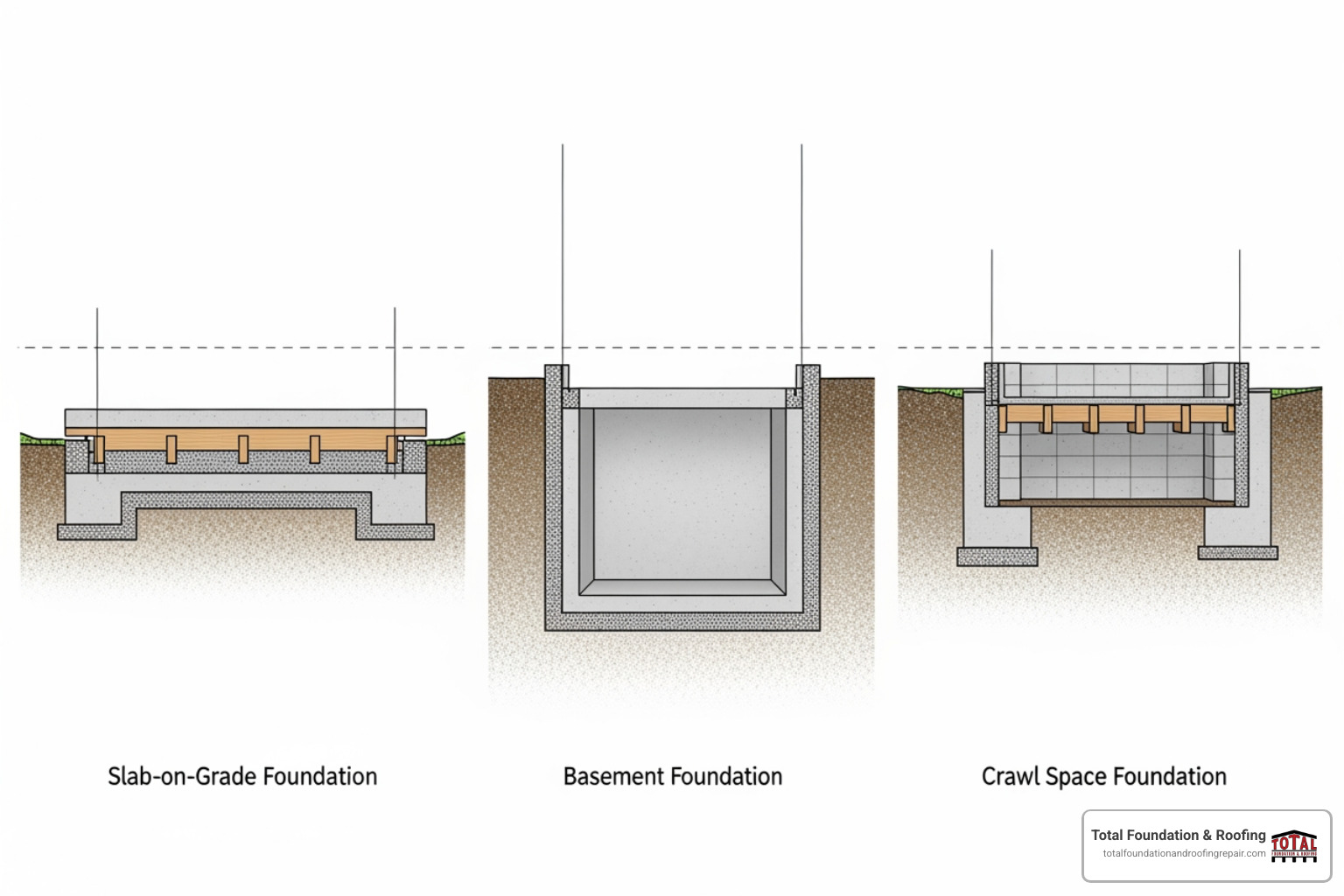
Structural integrity starts from the ground up. Concrete is used in 70-80% of new residential foundations for its superior compressive strength and longevity, as recognized by industry authorities like the Portland Cement Association. We specialize in the three common types found throughout the Texas Hill Country, each with distinct advantages:
- Slab-on-Grade Foundations: Poured as a single layer of concrete directly on prepared ground, these are cost-effective, quick to install, and highly durable. Their solid construction offers excellent resistance to moisture and pests like termites. However, plumbing and electrical lines embedded within the slab can be difficult and costly to access for repairs.
- Crawl Space Foundations: These foundations elevate the home on short foundation walls, creating an accessible but unlivable space underneath. This “crawl space” allows for easy access to plumbing, wiring, and HVAC systems, simplifying future repairs and maintenance. The trade-off is that crawl spaces require proper ventilation and moisture control to prevent mold, mildew, and wood rot.
- Basement Foundations: A basement is a full-height story built below ground, offering significant additional living or storage space. This type requires extensive excavation and, most importantly, robust waterproofing and drainage systems to combat hydrostatic pressure from surrounding soil and prevent water intrusion.
A well-built concrete foundation provides a low-maintenance, long-lasting base that supports immense structural loads and withstands harsh weather. For more on addressing issues with these foundations, see our comprehensive foundation repair services.
The Impact of Climate and Soil on Foundations
The Texas Hill Country’s expansive clay soils are a primary adversary to foundations. This type of soil behaves like a sponge, shrinking dramatically during droughts—which can cause the foundation to settle—and swelling significantly when saturated with rain, which can cause it to heave upward. This constant cycle of movement places immense stress on a rigid concrete structure. Poor drainage and erosion exacerbate these issues by allowing water to pool against the foundation or washing away the soil that supports it. Even large trees planted too close to a home can draw moisture from the soil, causing localized settlement. Our local knowledge is key to providing lasting solutions that account for these factors. Proactive water management and soil stabilization are crucial, a fact supported by resources like the Texas A&M AgriLife Extension.
Common Concrete Foundation Problems and Warning Signs
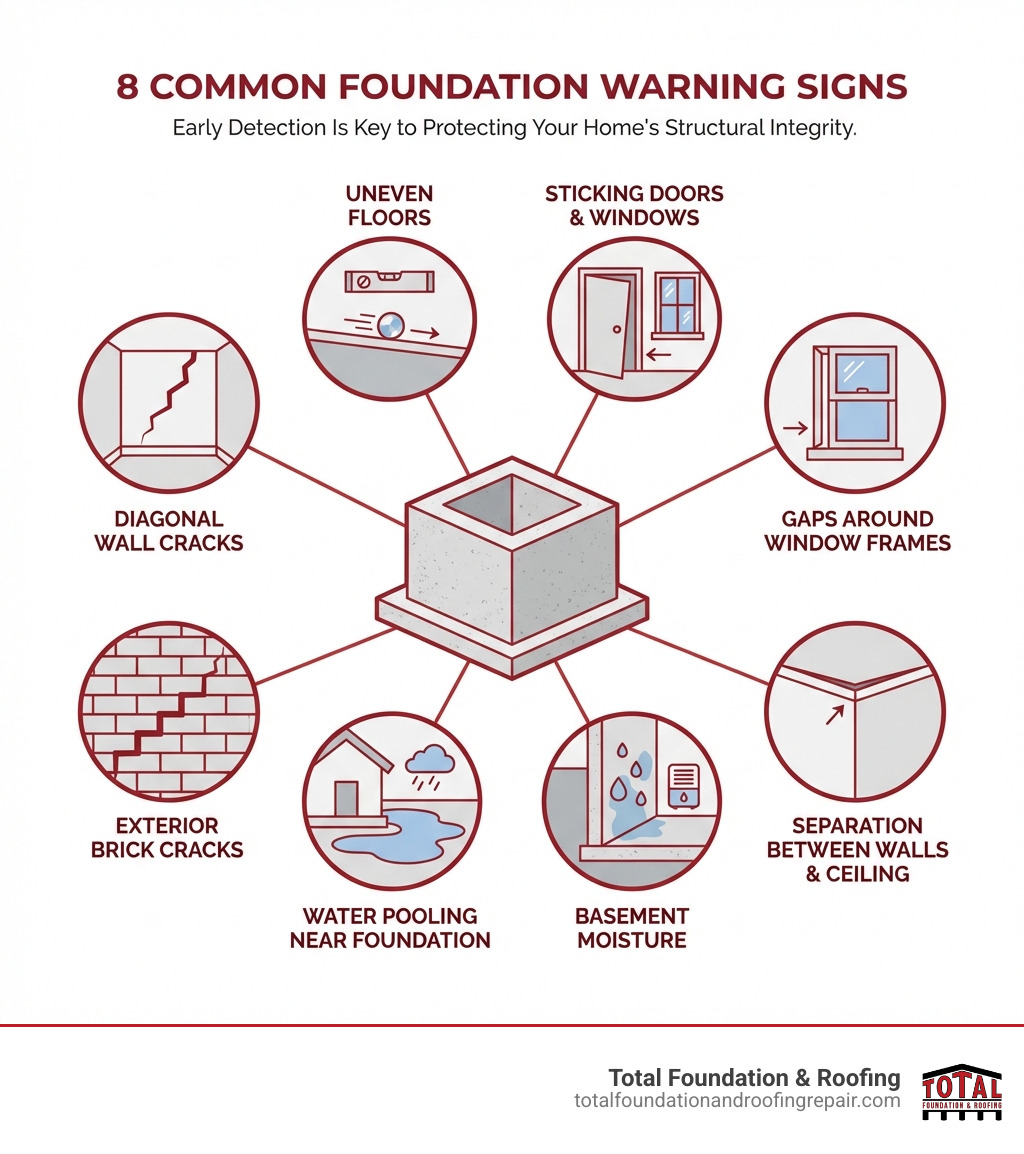
Identifying foundation problems early can save you from costly, complex repairs down the road. Here are common warning signs and what they mean:
Interior Warning Signs:
- Diagonal wall cracks near doors and windows: These openings are structural weak points. When a foundation settles unevenly, it creates diagonal stress that manifests as cracks radiating from the corners.
- Uneven or sloping floors: A noticeable dip or slope in your floors is a direct indication that the supports underneath have shifted or sunk.
- Doors and windows that stick: Foundation movement can warp the frames of doors and windows, causing them to jam or fail to latch properly.
- Gaps between window frames and walls: As the foundation settles, it can pull the wall away from the window frame, creating visible gaps.
- Cracks in drywall or ceiling junctions: These often appear as the frame of the house flexes under the strain of a shifting foundation.
- Water leaks or moisture in basements or crawl spaces: Cracks in the foundation walls, even hairline ones, can allow groundwater to seep in.
Exterior Warning Signs:
- Stair-step cracks in brick or masonry: This classic sign indicates that one section of the foundation has dropped lower than another, causing the rigid brickwork to shear apart in a step-like pattern.
- Visible sinking of the concrete slab: You may notice a corner of your home or patio appearing lower than the rest.
- Soil erosion or water pooling near the foundation: This points to drainage problems that are likely contributing to foundation stress.
- Gaps forming where walls meet the ceiling or roof: This indicates significant structural movement.
While some minor settling cracks are normal, any crack can be an entry point for moisture and may signal a larger structural problem. Effective waterproofing and prompt foundation crack repair are vital. Learn more about identifying these issues in our blog post on foundation warning signs.
A Homeowner’s Guide to Professional Concrete Foundation Services
Entrusting your property’s foundation to an expert is a critical investment in its safety, value, and long-term stability. Here’s what you should know about professional concrete foundation services.
The Process and Cost of Professional Concrete Foundation Services
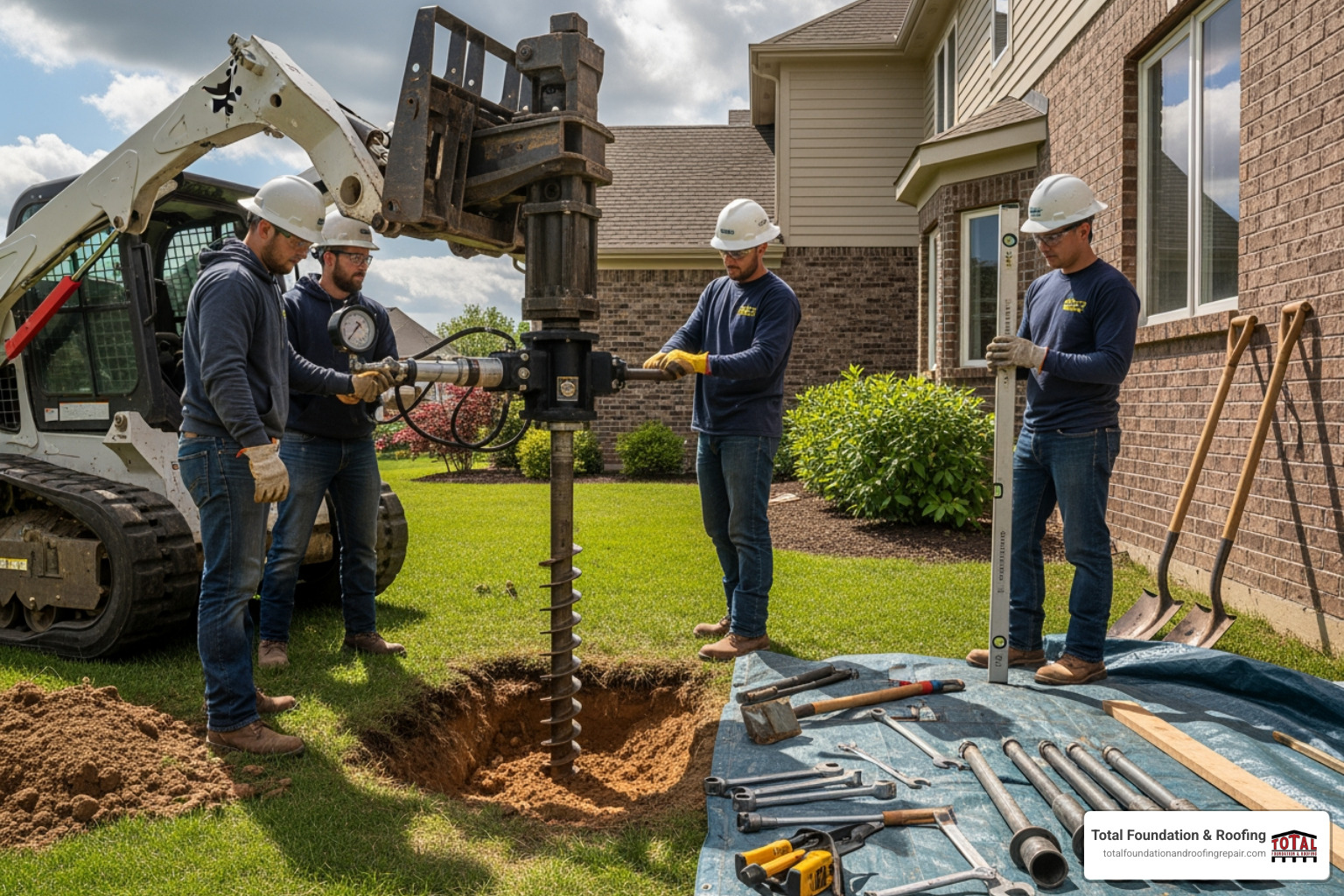
Understanding the professional process reveals why expertise and precision are non-negotiable.
New Foundation Installation Process:
- Design & Permitting: We collaborate with engineers to create blueprints, conduct land surveys, and secure all necessary local building permits.
- Site Prep & Grading: The land is excavated to the specified depth. The soil is then graded for proper drainage and compacted to create a stable base that prevents future settlement.
- Formwork & Rebar: Wooden or metal forms are set to create the mold for the foundation. A grid of steel reinforcement bars (rebar) is placed inside to provide tensile strength, complementing concrete’s natural compressive strength.
- Drainage & Pouring: We install perimeter drainage systems and pour a high-quality, custom-mixed concrete to fill the forms.
- Curing & Inspection: The concrete must cure for a specific period to reach its full design strength. This is followed by a final inspection to ensure compliance with building codes.
Foundation Repair Process:
- Inspection: A thorough structural evaluation identifies the root cause and extent of the damage, which is essential for designing an effective, long-term solution.
- Solution Design: We create a custom repair plan. This may involve installing steel piers (helical or pressed concrete) to lift and stabilize the foundation, underpinning to broaden the footing, injecting epoxy into cracks, or using polyurethane foam for slab leveling.
- Execution: Our trained technicians implement the repair with precision and high-quality materials, ensuring minimal disruption to your property.
- Waterproofing Integration: We often integrate waterproofing solutions, such as exterior membranes or interior drainage systems, to manage moisture and prevent the problem from recurring.
Costs: The average foundation repair costs between $2,000 and $7,000, but extensive damage requiring widespread piering can exceed $15,000. Key factors include the severity of the issue, the repair method, soil conditions, and property accessibility. Minor crack repairs may take a day, while major underpinning can take a week or more. For a detailed breakdown, see our foundation repair cost guide.
How to Choose the Right Concrete Foundation Contractor
Choosing a reputable contractor is the most important decision you’ll make. Here are key questions to ask:
- Are you licensed, bonded, and insured? This is non-negotiable. A license proves they meet state standards. Being bonded protects you if they fail to complete the job. Insurance (liability and worker’s compensation) protects you from being sued if an accident occurs on your property.
- Do you have local experience? A contractor familiar with the Texas Hill Country’s unique soil and climate challenges will be better equipped to provide a lasting solution.
- Can you provide local references and a portfolio? A proven track record of successful projects in your area is a strong indicator of reliability and quality.
- Do you offer a transferable warranty on your work? A strong, transferable warranty shows confidence in their service and adds value to your home if you decide to sell.
- Will I receive a detailed, written contract? Avoid vague quotes. The contract should clearly outline the scope of work, materials used, timeline, total cost, and payment schedule.
Always verify credentials with resources like the Better Business Bureau. A locally-owned company often has a deeper commitment to its community’s reputation and customer satisfaction.
The Long-Term Value of Professional Foundation Work
Investing in professional concrete foundation services is about securing your property’s future and your own peace of mind.
- Protects Property Value: A sound foundation is a prerequisite for maintaining and increasing your home’s market value. Foundation issues must be disclosed during a sale and can be a major deterrent for buyers.
- Ensures Structural Safety: Professional repairs restore the home’s structural integrity, eliminating the safety hazards associated with a failing foundation.
- Prevents Further Damage: Addressing foundation problems promptly saves money by preventing them from escalating into more severe, widespread issues like plumbing breaks, roof damage, and complete structural failure.
- Provides Peace of Mind: DIY repairs are extremely risky. They often fail to address the root cause, can lead to catastrophic failure, and may even void your homeowner’s insurance. Knowing your property rests on a solid, professionally repaired foundation built to standards outlined by bodies like the International Code Council (ICC) is invaluable.
Our certified workmanship is tailored to local conditions and backed by a substantial warranty. We are dedicated to exceeding customer satisfaction on every project. For a comprehensive evaluation, explore our full range of foundation repair services.